
.jpg "5 outdoor film screening venues in Da Nang during DANAFF IV")

.jpg "New museum in Hoi An highlights Japan’s renowned Satsuma ware")


Gửi bình luận
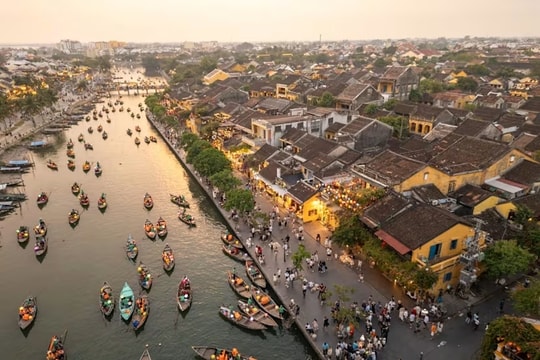
DNO - Hoi An is increasingly well positioned to emerge as one of Vietnam’s “cycling capitals,” closely aligned with the development of a low-emission urban model.
In an era when cities around the world are struggling with congestion, emissions, and overburdened infrastructure, Hoi An offers a strikingly different narrative.
Compact in scale yet rich in cultural and ecological value, the ancient town is quietly positioning itself as one of Vietnam’s most promising models for a low-carbon urban future.
What sets Hoi An apart is its natural urban design. Unlike sprawling metropolises where daily travel often stretches across long distances, most key tourist attractions in Hoi An lie within a 2 - 5 kilometer radius.
This simple geographical advantage creates ideal conditions for cycling to become a primary mode of mobility, not merely a recreational option.
A short ride can take visitors from the lantern-lit streets of the ancient town to green rice paddies, quiet village lanes, coconut palm forests, and finally to the coastline. Few destinations offer such a seamless transition between heritage and landscape within such a small footprint.
This intimacy between space and movement is what gives Hoi An its distinctive rhythm: slow, immersive, and deeply human.
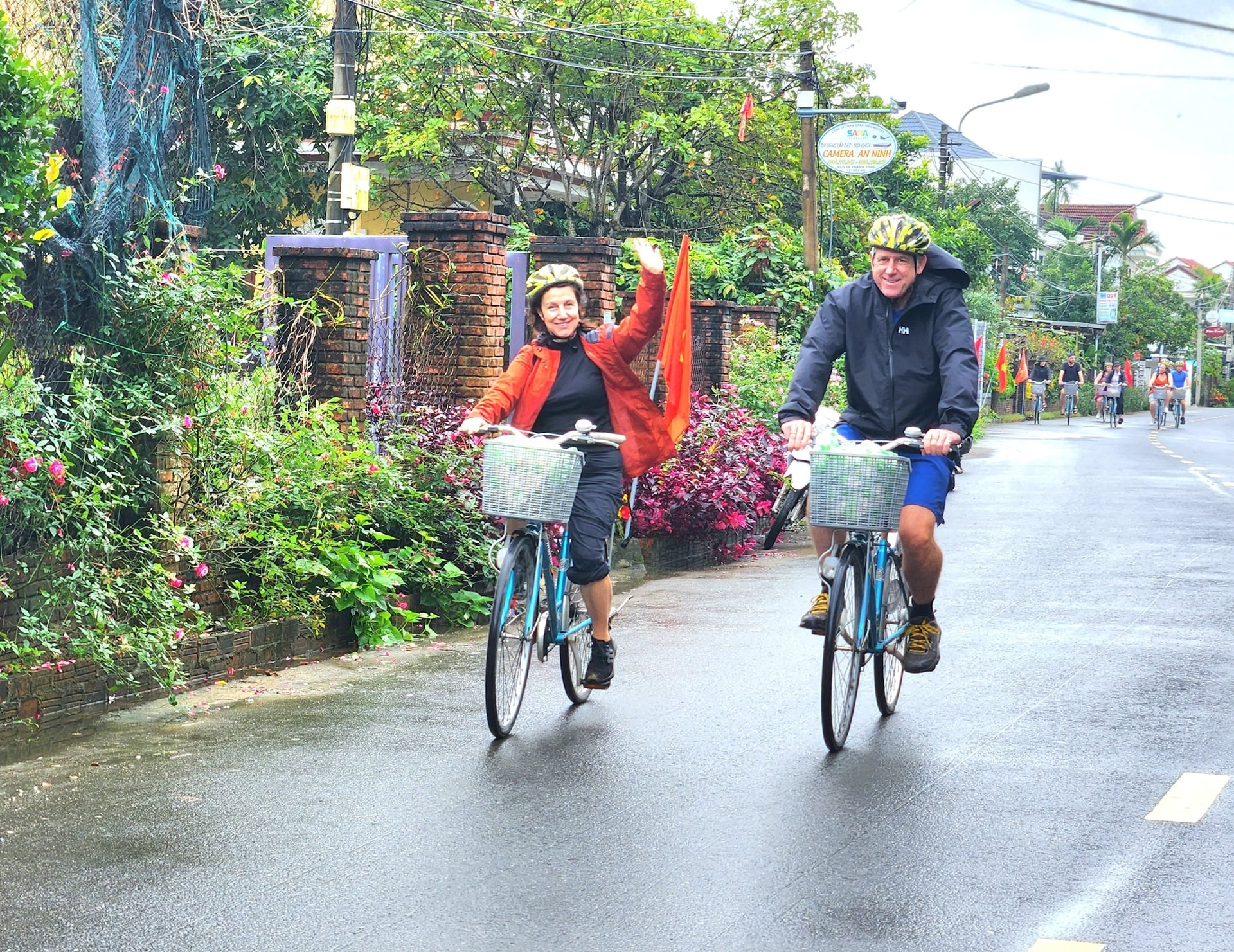
Rising bicycle usage not only helps reduce emissions and noise pollution, but also eases traffic pressure and improves overall environmental quality.
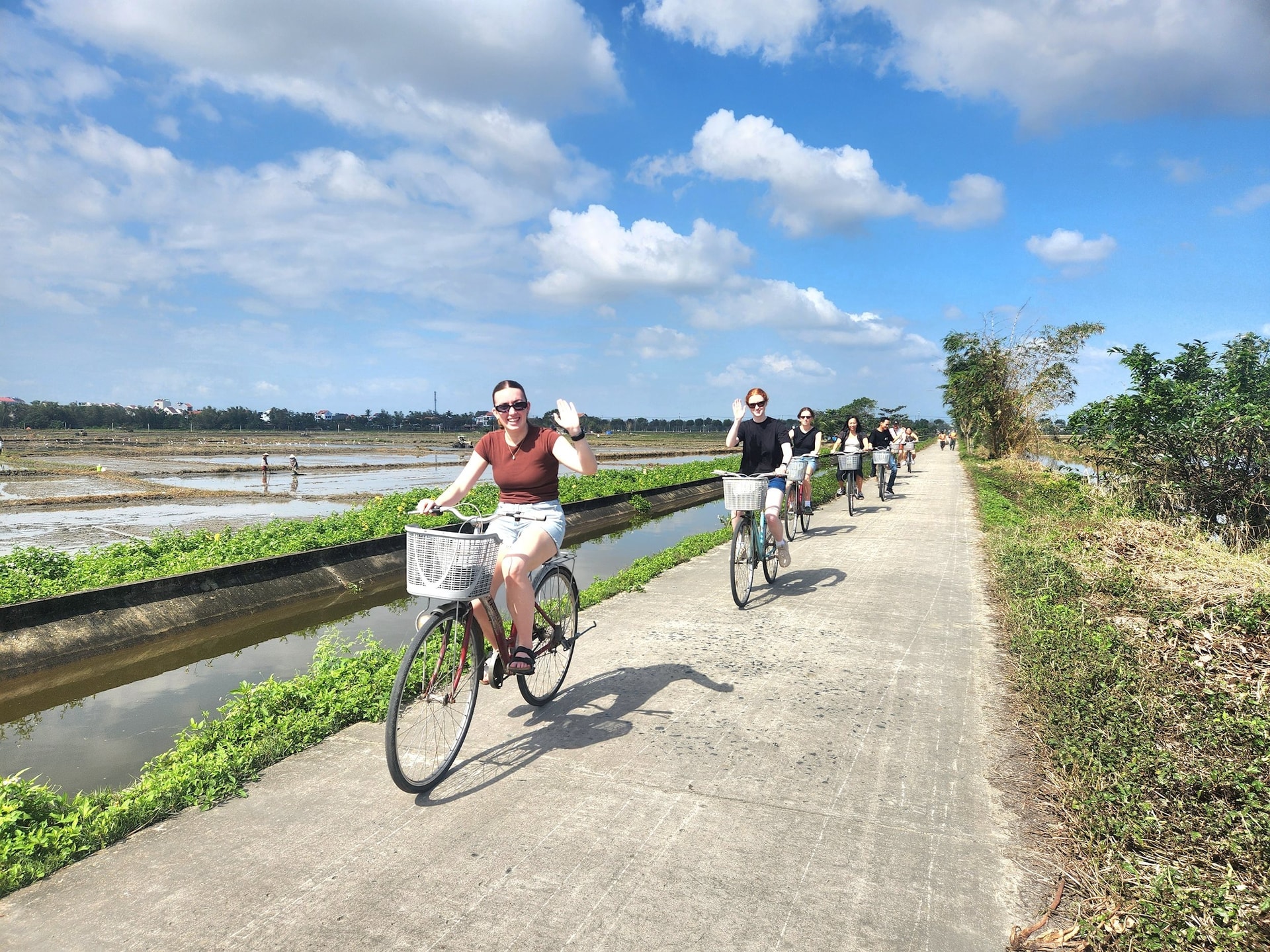
With its unique blend of landscape, cultural heritage, and a strong commitment to sustainable development, Hoi An is well positioned to establish itself as a low-carbon city closely associated with a distinctive cycling culture.
According to senior experts on Net Zero in Vietnam, local authorities should upgrade existing pathways into green cycling corridors and establish safe priority lanes linking the heritage core with surrounding eco-tourism sites.
He also recommends developing a multimodal transport ecosystem, supported by smart infrastructure hubs at key gateway locations to the city.
Beyond its environmental value, cycling in Hoi An is increasingly emerging as a catalyst for community-based tourism. Bicycle journeys help distribute economic benefits more evenly, extending beyond the central heritage zone into surrounding rural and craft villages.
Visitors on two wheels can easily reach traditional workshops, small-scale artisanal producers, and family-run agricultural farms, creating direct connections between tourism and local livelihoods. In this way, cycling contributes not only to sustainability, but also to more inclusive and resilient economic development.

This trend aligns particularly well with middle-aged and senior travelers from Europe, North America and Australia - markets with long-standing cycling cultures.
These visitors also tend to prioritize destinations that demonstrate environmental responsibility and a strong respect for local identity and heritage.
According to experts, Hoi An could serve as a core hub for expanding a wider regional cycling network.
There are potential routes such as the Hoi An-Da Nang corridor along the Co Co River, the Hoi An-My Son route connecting Cham cultural heritage sites, and the coastal Hoi An-Tam Ky route, which offers longer-distance experiences for travelers seeking nature and active exploration.
Alongside these flagship corridors, routes linking traditional craft villages, organic farming areas, and community-based eco-zones could form an integrated “green heritage cycling network”.
Bicycles, therefore, act as a connective thread, seamlessly linking culture, nature, and everyday community life into a single immersive travel experience.