
Gửi bình luận
DNO - In Hoi An, gentle water buffaloes are emerging as unexpected tourism icons, drawing foreign travellers eager to experience Vietnam’s simple beauty of life among rice fields.
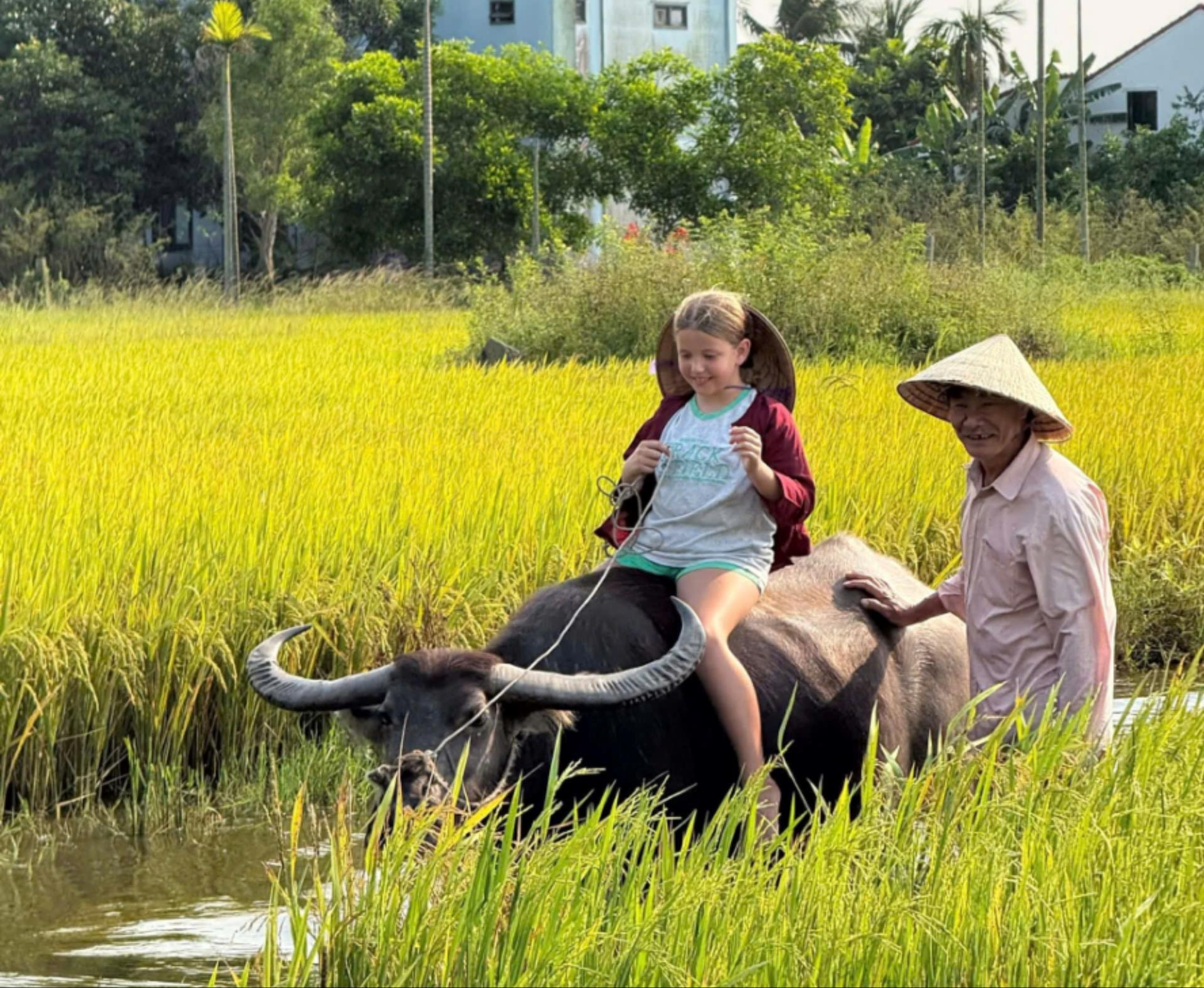
Just beyond the ancient streets of Hoi An, travellers cycling through endless green rice paddies often encounter an unforgettable scene: a farmer resting calmly on the back of a giant black water buffalo while the animal grazes quietly beside the road.
What may look like a spontaneous countryside moment is, in many cases, part of a unique form of rural tourism that has developed naturally in Vietnam.
Over the years, local farmers in Hoi An discovered that foreign tourists were fascinated by the sight of water buffaloes - animals deeply connected to Vietnamese farming culture but rarely seen in modern industrialized countries.
Instead of only raising buffaloes for agricultural work, some villagers in Hoi An began bringing them to scenic rice fields where visitors could stop, take photographs, pet the animals, or even enjoy short rides.
The buffaloes themselves receive remarkable care. Farmers bathe them twice a day, scrub their skin clean, and even spray perfume on them so visitors feel comfortable getting close.
The result is a surprisingly gentle and well-groomed animal that quickly becomes the center of attention among tourists.
For many farming families, this has become a valuable source of income. Some farmers now earn more from “buffalo tourism” than from rice cultivation itself.
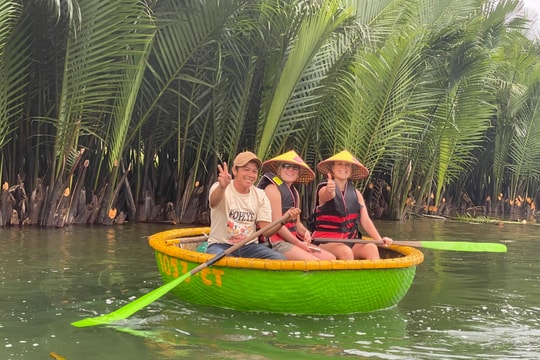
Tour companies in Hoi An have also partnered with buffalo owners to create eco-tourism experiences that combine cycling, rice farming, basket boat rides, vegetable gardening, fishing and local cooking classes.
Interestingly, some cafés and restaurants in the countryside have even purchased buffaloes simply to create peaceful rural scenery for guests. In these settings, buffaloes are no longer only farm animals - they have become living symbols of Vietnam’s countryside identity.
Today, around 20 to 30 buffalo owners in Hoi An rely on this activity as their main source of income.
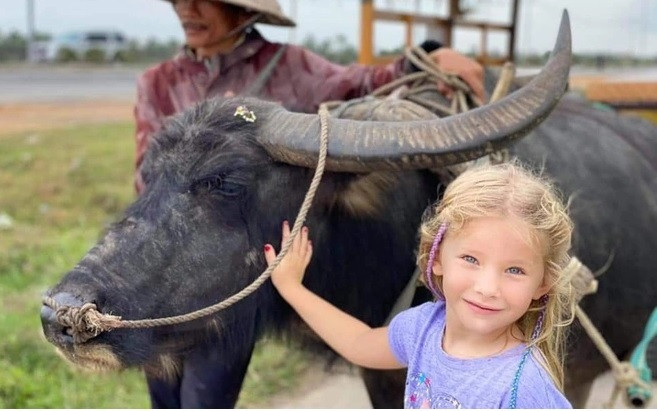
For many foreign visitors, especially those from Europe, Australia, or North America, the experience feels almost cinematic.
In highly urbanized societies, encounters with large farm animals are increasingly rare. Seeing water buffaloes walking slowly through rice fields beside farmers wearing traditional conical hats offers travelers a glimpse into a slower, more grounded way of life.
Many tourists say the buffalo tours provide something modern travel often lacks: authenticity. There are no luxury stages or artificial performances. Instead, visitors experience real countryside landscapes filled with the scent of wet grass, the sound of birds above the paddies, and farmers casually chatting under the shade of bamboo hats.
Oliver Williams said he and his family were surprised during their first visit to Hoi An to see how closely water buffaloes are connected with people in the countryside - a scene he had previously only seen in films about rural Southeast Asia.
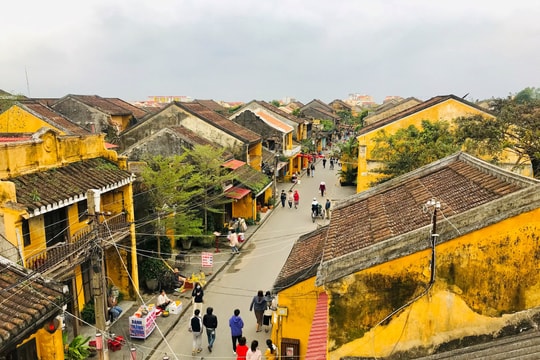
For many international visitors, the peaceful image of buffaloes wandering through rice fields just minutes away from Hoi An’s ancient town creates a uniquely unfamiliar and memorable experience.
The buffalo represents an important part of Vietnamese history. For generations, water buffaloes symbolized hard work, resilience, and the close relationship between humans and nature. In many villages, owning a healthy buffalo once meant security and prosperity.
As Vietnam modernizes rapidly, such scenes are gradually disappearing in many parts of the country. Tractors increasingly replace buffaloes, and younger generations are moving away from farming communities. Ironically, tourism is now helping preserve some of these rural traditions.
For many visitors, the charm of Vietnam is not only found in famous landmarks, but also in the quiet beauty of its countryside and the gentle water buffaloes that still wander through it.