
.jpg "Da Nang’s economy maintains strong growth momentum")


Gửi bình luận
DNO - With its great determination to transform its development model beyond tourism, Da Nang is accelerating the completion of its high-tech and industrial ecosystem, thereby reinforcing its position as an industrial hub in the region.
Toward high-tech industry
Da Nang has identified high-tech industry as one of the three pillars for the city’s rapid and sustainable economic development.
This strategic direction centers on the Da Nang Hi-Tech Park, a key piece of strategic infrastructure expected to become a nucleus connecting intellectual and technological resources across the Central and Central Highlands regions.
The Hi-Tech Park is not a manufacturing site but also a center for research and development (R&D) and the incubation of cutting-edge technologies.
The city prioritizes attracting projects with high intellectual content, especially in integrated circuit design, semiconductors, artificial intelligence (AI), and biotechnology.
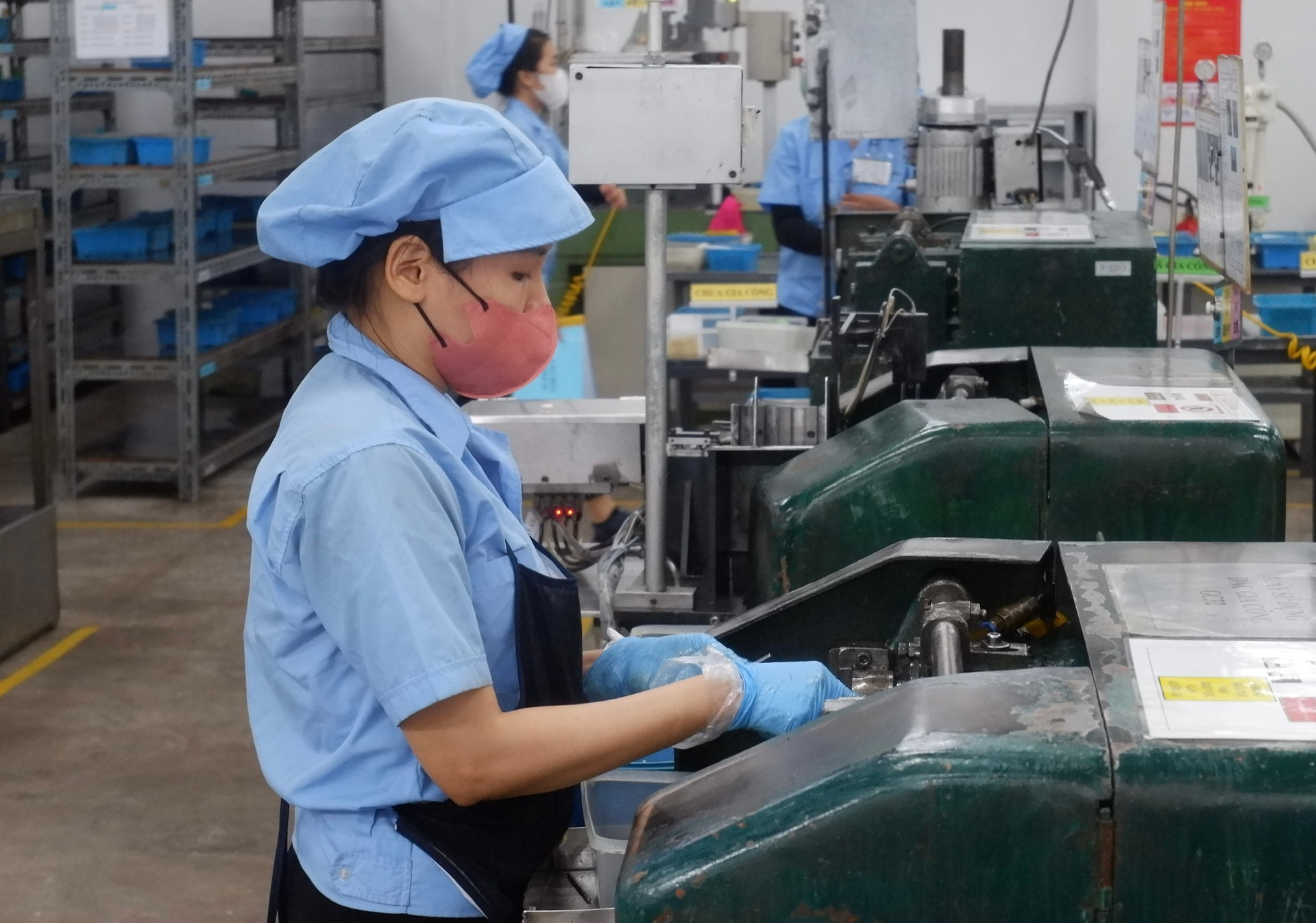
For example, the aerospace component projects of Sunshine Factory, a subsidiary of the Universal Alloy Corporation Vietnam Co., Ltd. (USA), and the KP Vina Factory, a subsidiary of the KP Aerospace Vietnam Co., Ltd. (South Korea), have placed Da Nang on the world's aerospace manufacturing map by producing complex components for Boeing and Airbus aircraft.
Developed by leading telecommunications corporations, digital infrastructure and data center projects are laying a foundation for massive data storage and processing capabilities, directly supporting the city’s digital transformation roadmap and digital economy development.
These include the Da Nang Data Center, with a total investment of VND 800 billion in Phase 1 and a projected VND 1.2 trillion in Phase 2; plus the AI DeCenter Data Center, with an estimated total investment of approximately US$ 200 million.
The city’s master plan outlines a continued restructuring of the industrial sector toward gradually reducing land- and labor-intensive industries with low added value; restricting and eventually eliminating environmentally polluting production activities; and increasing the proportion of high-tech, knowledge-intensive, high value-added, and environmentally friendly industries.
Specifically, priority will be given to the development of high-tech industries, including microelectronics, semiconductors, precision mechanics, mechatronics, optoelectronics and automation; environmental technology, new energy technology; new materials technology and nanotechnology; and others in a bid to become the city’s leading industrial sectors.
Building infrastructure for industrial development
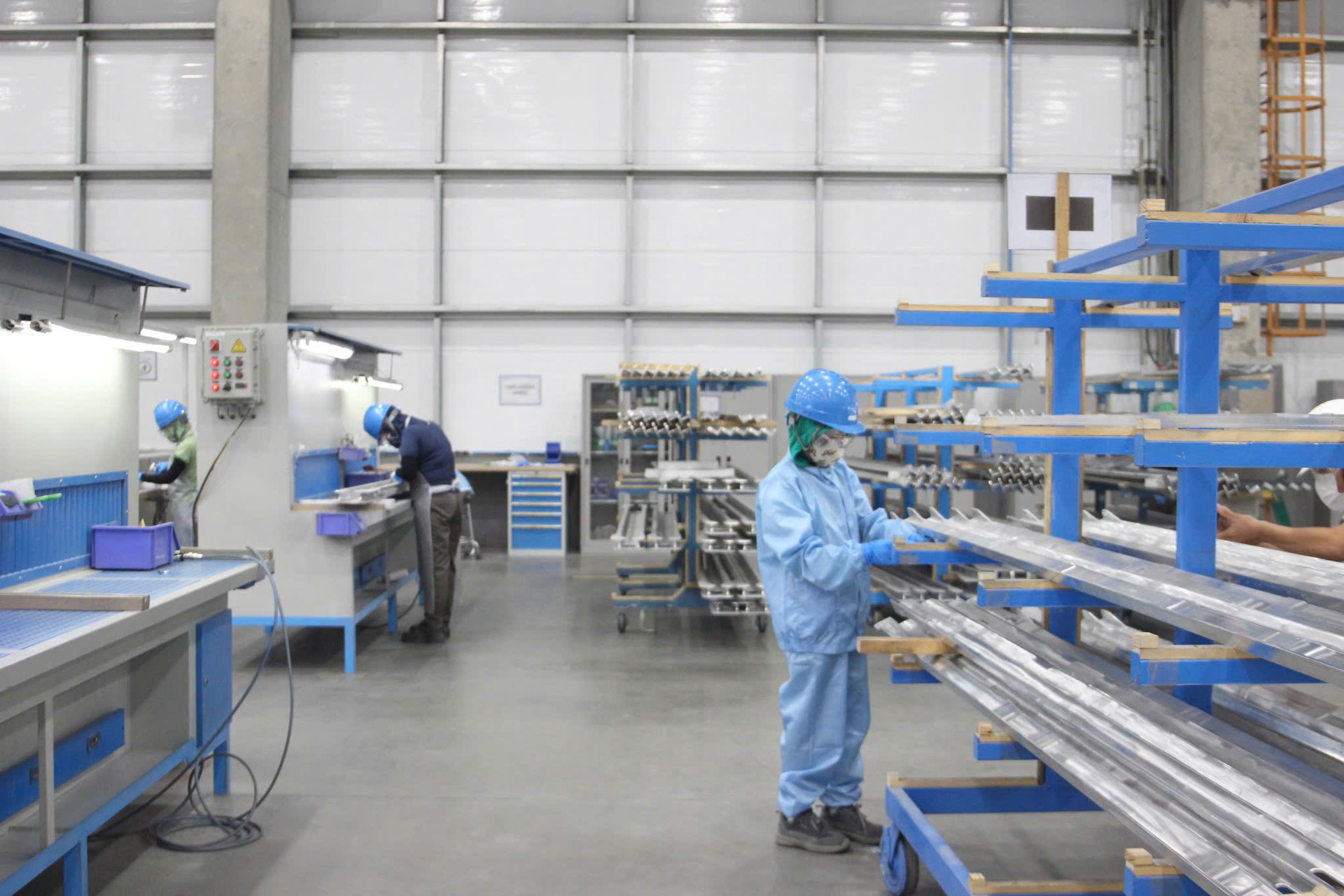
Under the master plan through 2030, Da Nang is expected to have 126 industrial clusters and 36 industrial parks across the city.
To date, 60 industrial clusters have been put into operation. The city has strongly attracted investment in processing and manufacturing, mechanical engineering, electronics, automotive, garment and textile, wood processing, and supporting industries, forming high-value supply chains.
Its advantageous seaport system also creates opportunities to expand supply chains, enhance logistics services, and drive robust growth in the trade sector.
In 2026, the municipal Department of Industry and Trade will concentrate on attracting investors to develop infrastructure for industrial clusters in line with new spatial development orientations.
This includes proposals for public investment in several industrial clusters in particularly disadvantaged communes such as Tay Giang, Song Kon, Que Phuoc, and Tra My; completing technical infrastructure; investing in centralized wastewater treatment systems in compliance with regulations; and establishing industrial clusters associated with a centralized livestock and poultry processing center in Da Nang.
Da Nang's industry and trade sector aims for the industrial sector to account for 21% of GRDP by 2030 (of which processing and manufacturing industry will contribute 16%); and an average industrial growth rate of 11% during the 2026 - 2030 period.
Also, the average growth rate of the manufacturing industry during the 2026 - 2030 period is projected to reach 11%. By 2030, 50% of industrial clusters will have centralized wastewater treatment systems that meet standards.