

.jpg "Da Nang seeks deeper high-tech cooperation with the RoK")

Gửi bình luận
DNO - The first appearance of Vietnam International Financial Centre in Da Nang (VIFC-DN) in the 40th Global Financial Centres Index (GFCI 40) not only marks a significant milestone but also underscores the city’s strategic potential and appeal in the context of global financial integration.
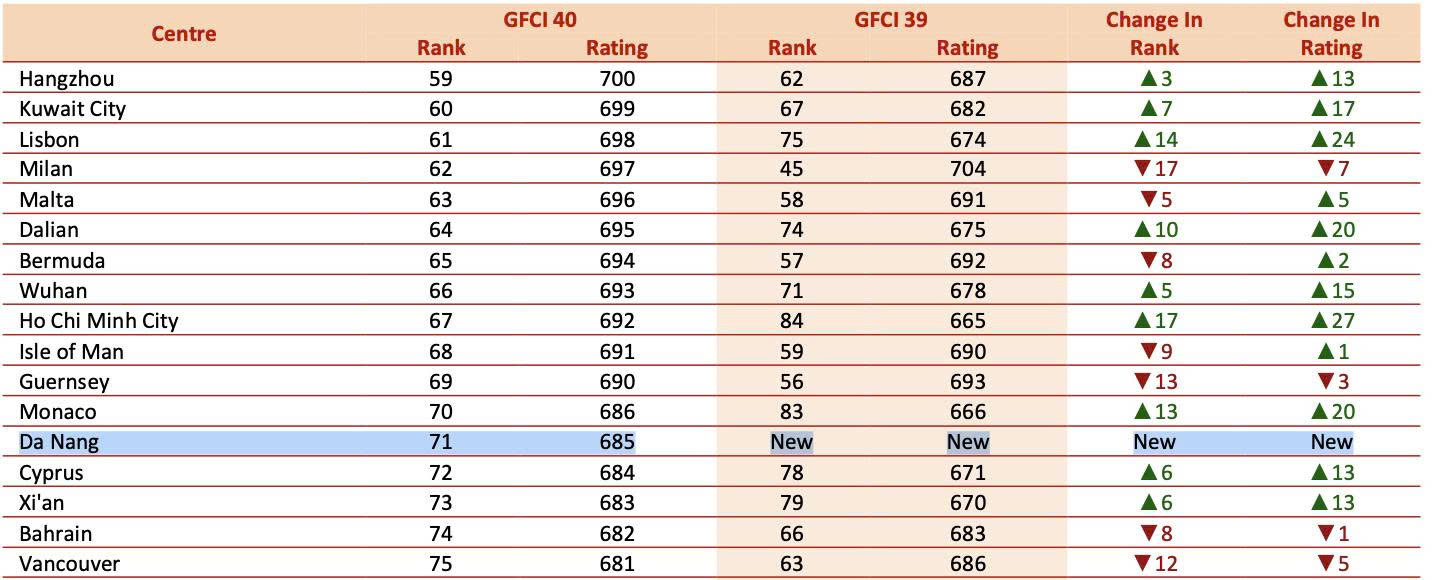
Da Nang ranked 71st globally with 685 points in the 40th Global Financial Centres Index (GFCI 40), while Ho Chi Minh City ranked 67th with 692 points. Vietnam therefore has two representatives in the international financial centres ranking.
The report places the two Vietnamese cities in different profile groups. Da Nang is classified as an “International specialist” while Ho Chi Minh City remains in the “International contender” group.
In GFCI 39, Da Nang was still in the assessment pool and had not yet been ranked because it had not received the minimum 150 assessments required for inclusion in the main ranking. By GFCI 40, the city had received 196 assessments.
In the FinTech ranking, Ho Chi Minh City climbed 12 places to 71st, while Da Nang made its debut at 74th.
The Asia-Pacific region also recorded changes in the latest edition. The region’s average score rose by 1.48%, the highest increase among all regions, compared with an average global growth of 0.8%.
Within ASEAN, Ho Chi Minh City and Da Nang currently rank above Bangkok (Thailand), Jakarta (Indonesia) and Manila (the Philippines), but remain behind Kuala Lumpur (Malaysia) and Singapore.
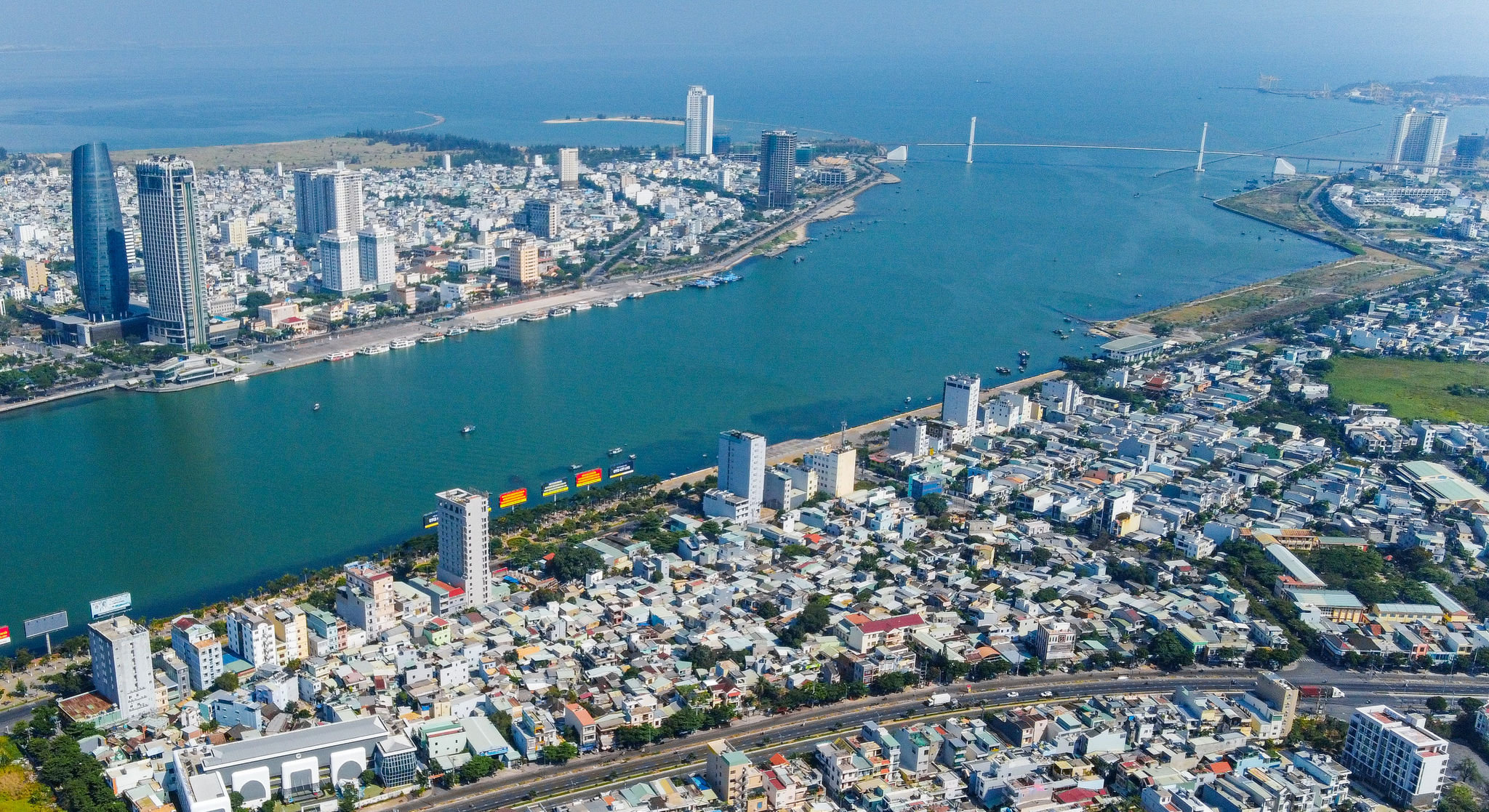
According to experts, VIFC-DN’s inclusion in the GFCI 40 ranking is viewed as a positive signal for its development in the years ahead.
According to the GFCI 40 survey of key factors determining the competitiveness of global financial centres, Business Environment and Human Capital are the most influential elements.
From its early stages, VIFC-DN has laid an emphasis on developing operational capacity in line with international standards.
Da Nang has arranged and signed contracts with three international experts with experience working at major financial centres around the world.
It has also strengthened cooperation with international organizations, experts and educational institutions to prepare a skilled workforce for VIFC-DN.
At the same time, the University of Da Nang has partnered with the School of Management and Economics of the Chinese University of Hong Kong, Shenzhen to establish an Academy of FinTech and Sustainable Finance in Da Nang, creating an additional foundation for developing high-quality human resources for VIFC-DN’s long-term growth.
In terms of financial products, VIFC-DN is preparing several initiatives aimed at creating direct links between financial markets and the real economy.
Three key product proposals are currently under development: attracting asset management companies and investment funds to mobilize international capital for development investment; studying the establishment and pilot operation of a commodity exchange; and piloting a voluntary carbon credit exchange to support international transactions.
In addition, development initiatives in green finance, carbon markets, fintech, digital assets, tokenization, capital markets, infrastructure finance and supply-chain financing are being further developed.
According to a report by VIFC-DN, the center will continue working with VIFC-HCMC to finalize the procedures, regulations and operational mechanisms of Vietnam International Financial Centre. It will also gradually establish markets and develop substantive financial activities in Da Nang.
The Global Financial Centres Index (GFCI) is a widely recognized ranking of the competitiveness of financial centres worldwide.
Published twice a year by Z/Yen Partners in London and the China Development Institute in Shenzhen, the index focuses on five key areas: business environment, human capital, infrastructure, financial sector development and international reputation.
The GFCI 40 report is based on 144 quantitative factors and 39,531 assessments from 6,147 professionals. Notably, the ranking not only reflects the current standing of financial centres but also assesses their potential for development over the next two to three years.