
.jpg "Da Nang wins 13 honors at world travel awards 2026")

Gửi bình luận
DNO - Beyond being a new tourist attraction, The Hangart, a creative space dedicated to handicrafts, plays a role in preserving and promoting traditional cultural values to the public and international friends.
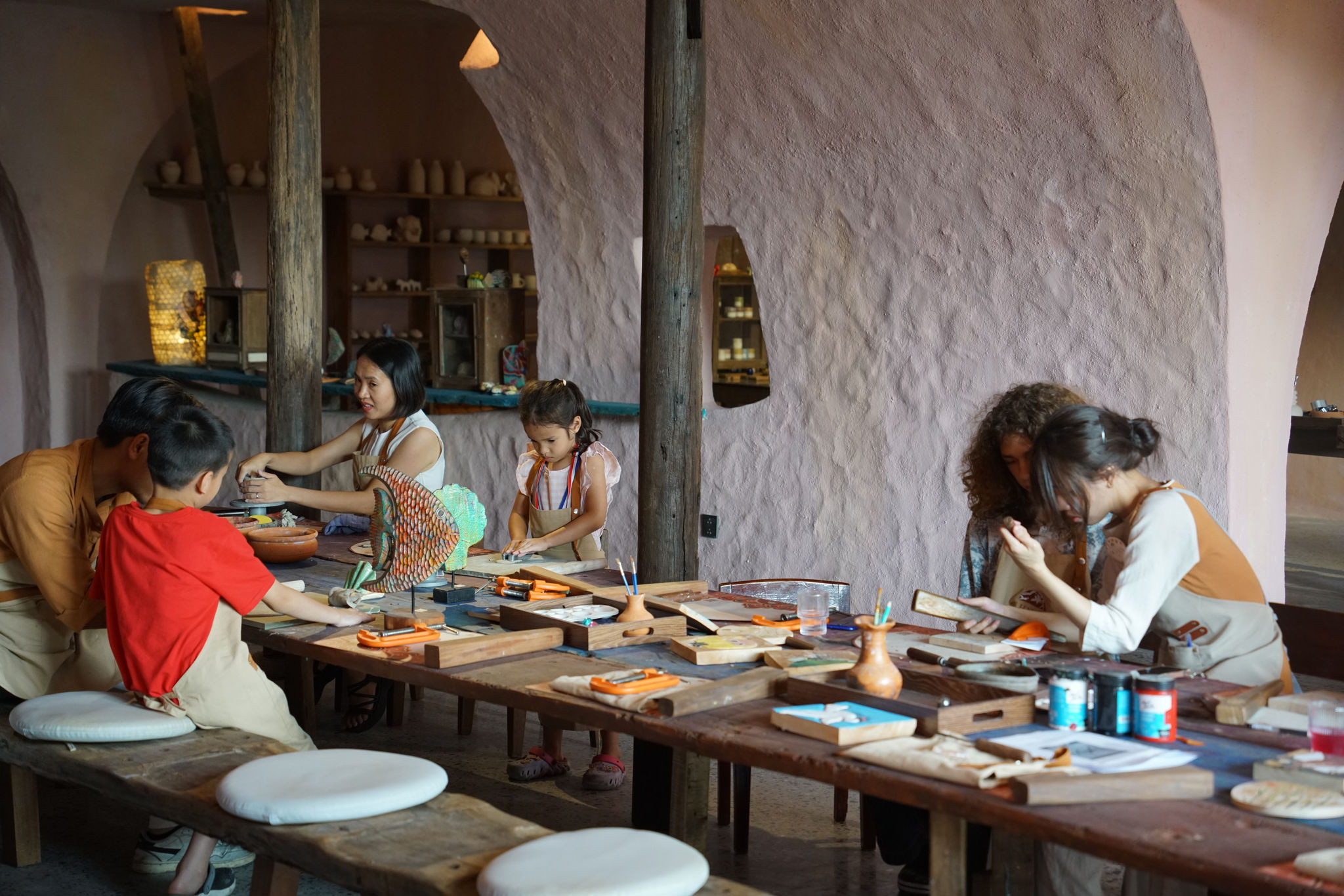
Located on Lac Long Quan Street in Dien Ban Dong Ward, Da Nang, The Hangart covers 3,000 square meters and recreates 12 traditional craft villages from across Vietnam.
The venue regularly hosts 16 craft workshops, allowing visitors to experience a wide range of traditional cultural practices firsthand. These include making dó paper, creating pottery inspired by Thanh Ha Pottery Village, Kim Bong wood carving in Hoi An, hand embroidery, folk painting and natural dyeing.
Additionally, visitors to The Hangart can take part in activities associated with traditional Vietnamese life, such as making essential oils, herbal balms, herbal soaps and traditional cakes.
Each workshop is designed as a hands-on experience, allowing visitors not only to observe but also to create their own handicrafts.
The space holds a special appeal for international visitors. Upon entering The Hangart, visitors feel as though they have stepped into a miniature complex representing traditional craft villages, with a wide variety of hands-on activities.
Each area offers a different glimpse into Vietnamese culture, making the journey of cultural discovery more diverse and engaging.
Visiting Da Nang for the first time and experiencing The Hangart, Thai tourist Kuntida Juntarawong said she was particularly impressed by the space.
The layout and handcrafted products on display gave her a sense of connection with Vietnamese culture, especially the hands-on activities such as making jewelry and lanterns.
The creative space grew out of the passion of young people who want to bring traditional culture closer to the general public and international friends.
Instead of presenting heritage in a conventional manner, The Hangart integrates cultural values into experiential activities that are closely connected to contemporary life.
According to Ms. Kim Thao Linh, sales manager at The Hangart, international visitors currently account for more than 80% of the venue's guests, mainly from Japan, China, Russia, the Philippines and Thailand.
As tourism preferences evolve, services incorporating traditional cultural elements are attracting growing interest from visitors.
During their experience, guests learn about the history of the craft villages, make handicrafts themselves and take their creations home as souvenirs of their journey through Vietnam.
The appeal of The Hangart's model featuring 12 traditional craft villages lies in its ability to connect visitors with Vietnamese culture beyond language and geographical barriers.
By making the products themselves, visitors not only gain a better understanding of the crafting process but also experience the cultural stories behind each traditional craft.
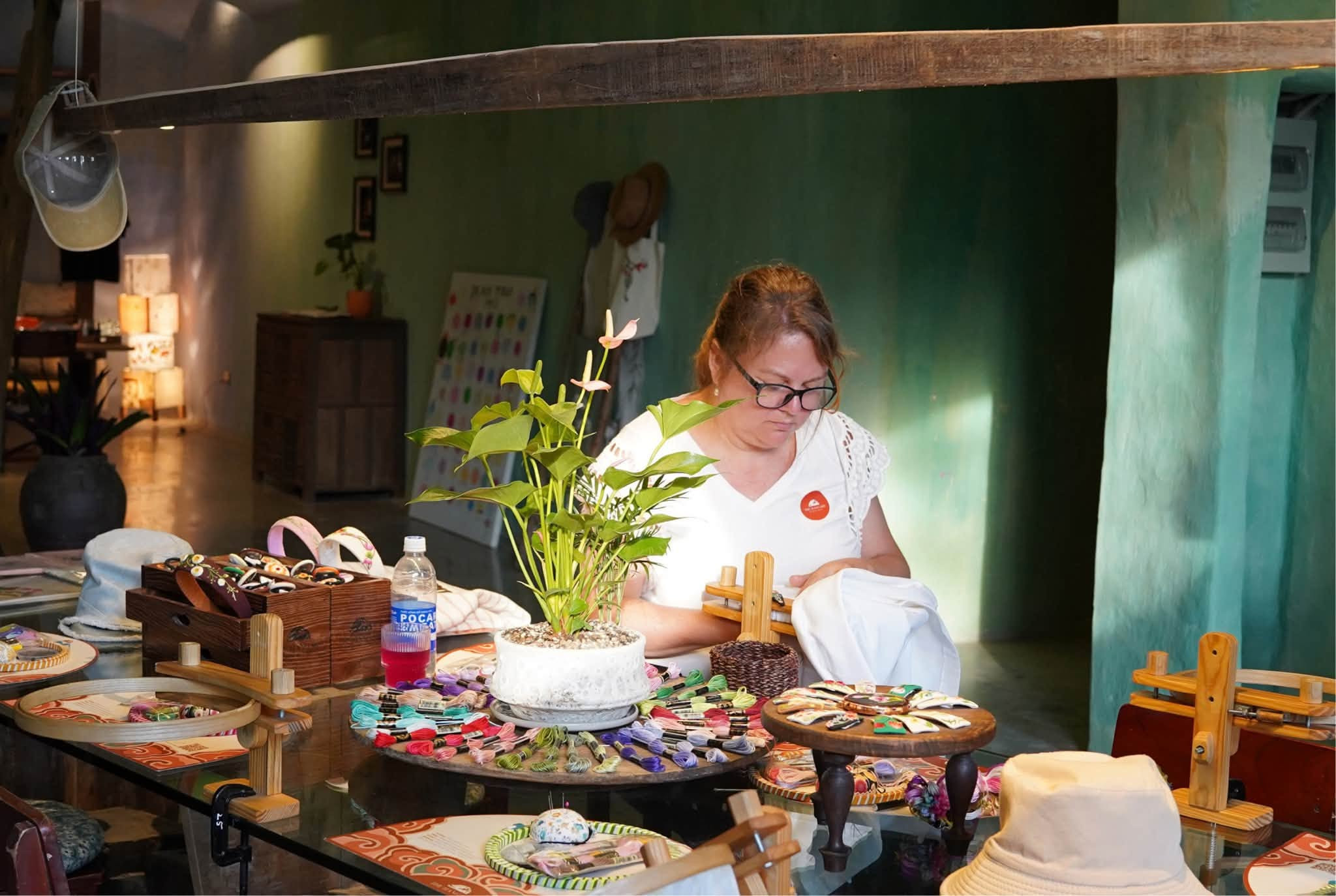
Artisan Tran Thi Thu Trang, who has more than 20 years of experience in silk embroidery, remains dedicated to her craft, guiding visitors through every stitch.
She shared that she found joy in her work, passing on her craft to young people and promoting Vietnamese culture to both domestic and international visitors.
When visitors personally embroider silk, bags, or conical hats to take home as souvenirs, it also provides as an opportunity for traditional handicrafts to reach a wider audience.
The craft workshop model in Da Nang not only enriches the city's tourism ecosystem but also helps promote the image of Vietnam as a culturally distinctive, dynamic and creative country to international friends.
According to Ms. Nguyen Thi Thuy Ha, finding ways to adapt traditional crafts to contemporary life is key to preserving and spreading their values, thereby helping sustain the vitality of craft villages at risk of disappearing.
In Da Nang, efforts by organizations and businesses to actively harness the value of history and traditional culture for tourism are opening up new ways to bring heritage into modern life, as well as creating further opportunities for traditional crafts to be preserved and developed.