
.jpg "The KOLs effect: How digital influencers redefine tourism in Vietnam")
.jpg "Winners of VNG IRONMAN Vietnam and VNG IRONMAN 70.3 Da Nang 2026 revealed")
.jpg "What makes Vietnam appealing to Indian tourists?")
Gửi bình luận
DNO - As global tourism enters a new era of digital mobility and seamless travel, Vietnam is taking another step toward modernising its border procedures with the nationwide rollout of a new Pre-arrival Information (PAI) system for international travellers.
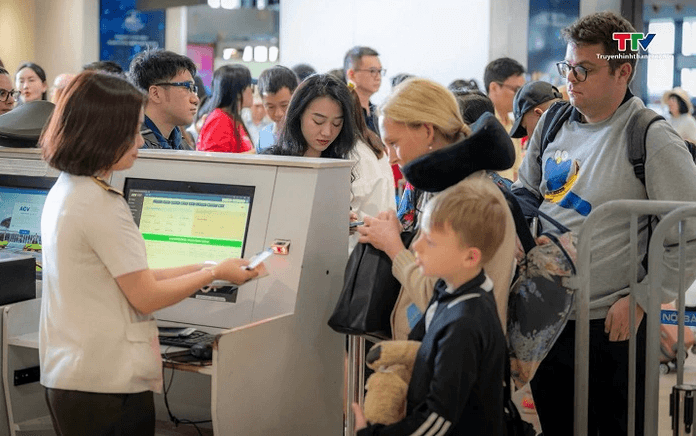
Developed by the Immigration Department under the Vietnamese Ministry of Public Security, the online platform allows foreign passengers to submit travel-related information before arriving in Vietnam.
The initiative follows a successful pilot programme launched on April 15 at Tan Son Nhat International Airport, one of Southeast Asia’s busiest gateways.
The system is designed to make immigration procedures faster, smarter and more convenient. By enabling travellers to complete declarations online within three days before arrival, authorities can process information in advance, helping reduce congestion and waiting times at immigration checkpoints.
The move reflects Vietnam’s broader ambition to accelerate digital transformation in tourism, aviation and public administration at a time when international travel demand is rapidly recovering.
It also aligns with the growing global shift toward contactless travel experiences and smart border management technologies.
For travellers, the benefits are immediate. Instead of filling out paperwork after landing or waiting in long queues during peak hours, passengers can complete procedures anytime and anywhere using internet-connected devices.
The system is expected to particularly benefit business travellers, families and tourists on tight schedules seeking smoother airport experiences.
For airlines and tourism operators, the platform opens new opportunities to enhance customer support and improve operational efficiency through early passenger guidance and digital pre-clearance services.
Early results from the pilot phase suggest strong public acceptance. According to the Immigration Department, more than 161,000 passengers accessed the system during the first 15 days of operation, while nearly 120,000 successfully completed their declarations.
Participation among foreign travellers reached approximately 70 per cent, despite the programme remaining voluntary.
The pilot phase also provided valuable insights for further improvements, including simplifying user interfaces and reducing declaration errors related to flight code mismatches.
Vietnam plans to gradually expand the PAI system to other international airports and eventually to land border gates nationwide, adapting the rollout to real-world operational conditions.
As Vietnam continues positioning itself as one of Asia’s fastest-growing travel destinations, the nationwide deployment of the PAI platform signals more than just an administrative upgrade.
It reflects Vietnam’s efforts to build a more connected, efficient and traveller-friendly tourism ecosystem, one that matches the expectations of a new generation of global travellers.