
.jpg "Da Nang unveils 203 investment projects for 2026 - 2030")
Gửi bình luận
DNO - Vietnam has been assessed as having a stable government, a solid economic vision, a rational policy management mechanism, low investment barriers, and strong incentive programs compared to similar markets.
Morethanshipping.com, a US-based logistics website, recently described that Vietnam is quietly undergoing reforms and emerging as an attractive destination for investors in the 2026 - 2035 period.
According to the analysis, Vietnam holds a strategic position along major regional maritime routes, including the East - West Corridor linking the Americas, the Middle East, India and Europe, and the North - South Corridor connecting China and Southeast Asia, making the country an important gateway for international trade.
With a coastline stretching roughly 3,200 kilometers and 114 seaports as of January 2022, including several deep-water ports, Vietnam enjoys major advantages in logistics and import - export activities, it said.
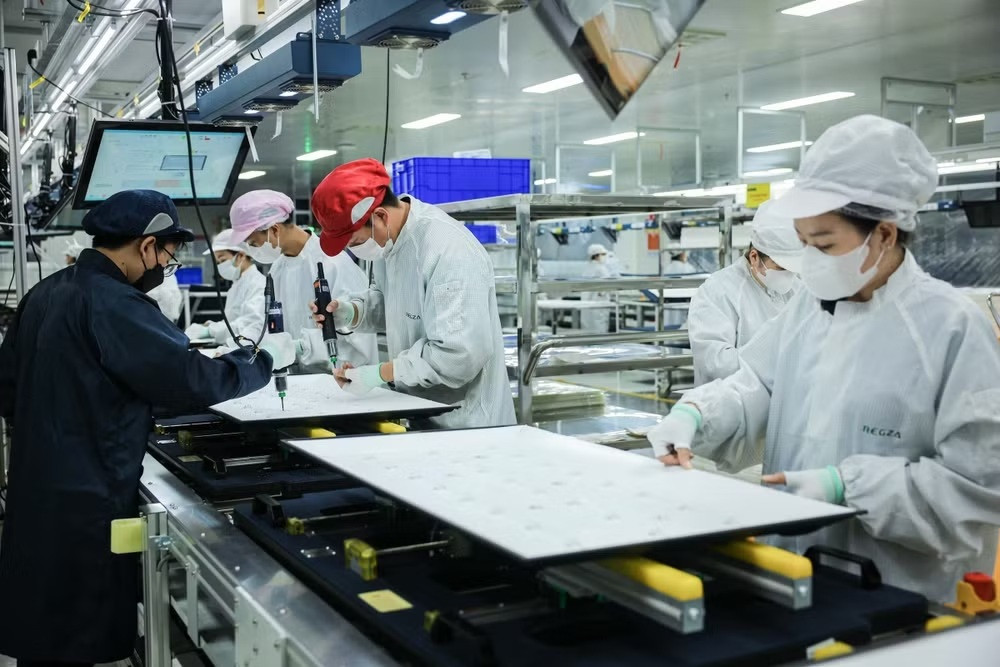
Furthermore, many factories in Vietnam are owned by Chinese and South Korean firms, facilitating integration into existing supply chains and easing the transfer of production standards, procedures and product information, according to the writing.
Despite global challenges and natural disasters in 2025, Vietnam's economy maintained strong momentum, recording growth of 8.02%, further reinforcing its positive outlook.
This momentum continues to attract foreign direct investment (FDI), as Vietnam becomes an increasingly appealing destination for companies seeking to diversify their presence in Asia, access the Vietnamese and South Asian markets, complement operations in China, and take advantage of Vietnam’s extensive network of free trade agreements (FTAs), manufacturing advantages and market opportunities.
Another key driver is Vietnam - US trade relations, supported by preferential trade arrangements such as the Bilateral Trade Agreement and the Generalized System of Preferences (GSP).
Many businesses now view Vietnam as a safer or complementary investment option in Asia for downstream manufacturing, assembly and service operations.
At the same time, Vietnam is entering a pivotal stage of development, pursuing ambitious growth targets while restructuring its regional economy.
The government is prioritizing high-value growth through policies aimed at improving productivity, promoting innovation and accelerating industrial upgrading.
The year 2026 is also considered a crucial phase in the country’s 2021 - 2030 development strategy, with a focus on high-quality growth, digital transformation and sustainable development.
By 2030, it aims to become Southeast Asia’s second-largest e-commerce market and further transition towards a knowledge-based and innovative economy.
In addition, Vietnam has set ambitious growth targets, including annual GDP growth of over 8% and above 10% during the 2026 - 2030 period. It also aims to raise per capita income to around US$ 8,500 by 2030 and US$ 38,000 by 2050.
These goals are underpinned by a young and sizeable workforce of nearly 60 million people, a number that continues to grow each year.