
Gửi bình luận
DNO - Over centuries, artifacts that were unearthed beneath the ground unfold their stories of history, culture, and the daily lives of ancient inhabitants.
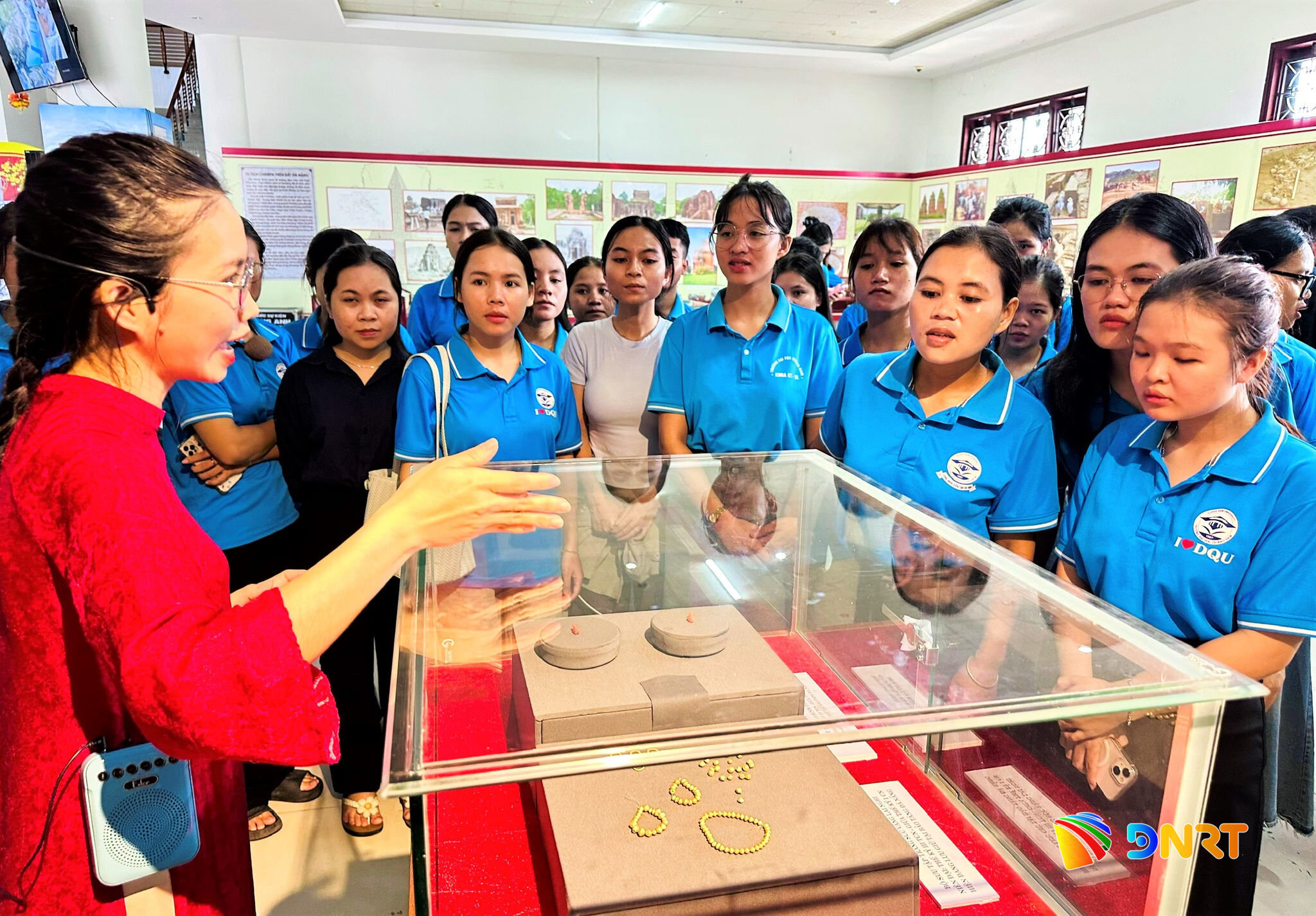
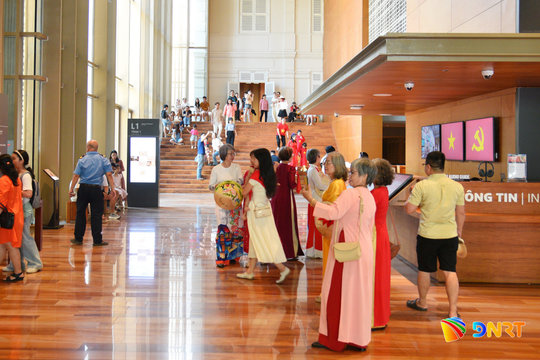
At the thematic exhibition “Da Nang Cultural Heritage - Origins and Continuity", recently launched by the Da Nang Heritage Management and Museum Center, each artifact reflects the journey of preserving and carrying forward the cultural values of the Quang region.
Vietnam National Treasures
The national treasures belonging to the Sa Huynh and Champa cultures showcased at the exhibition stand as testaments to the rich history, exquisite craftsmanship, and cultural exchange of ancient inhabitants in the Quang region.
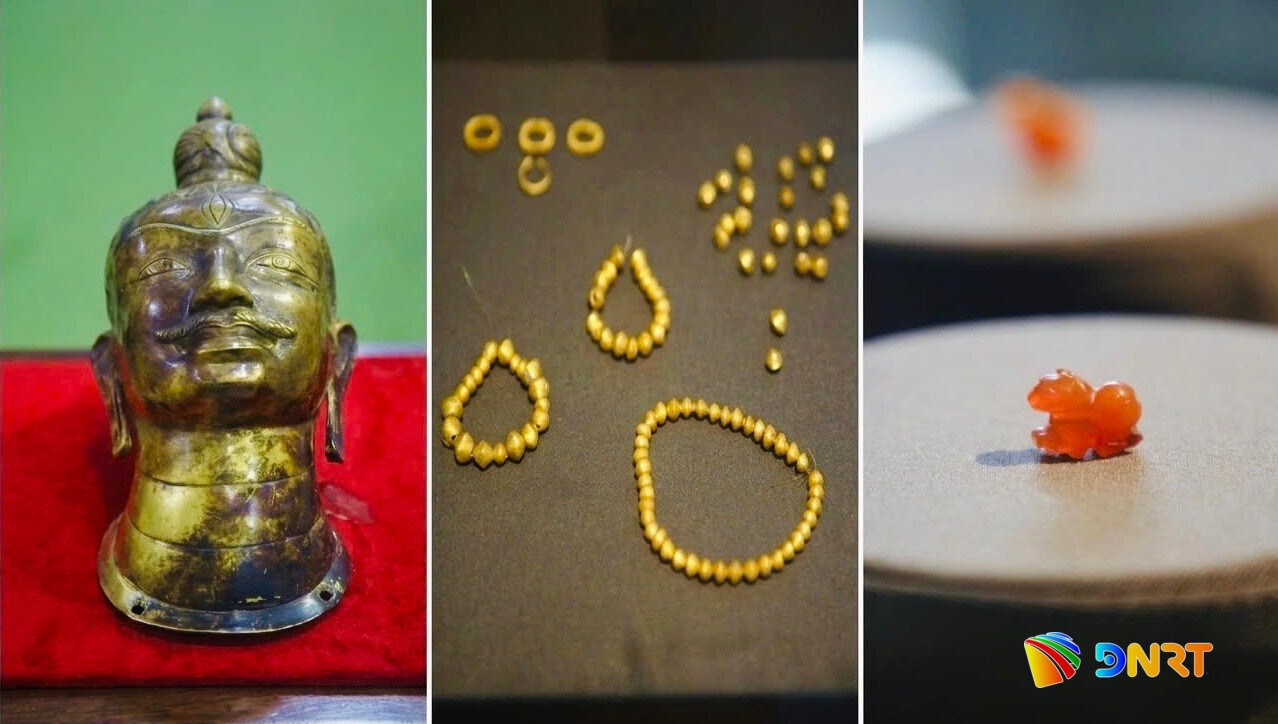
Representative is the Shiva Head Sculpture, an original artifact crafted from a high-gold alloy, classified among exceptionally rare antiquities.
This statue was discovered in 1997 in Phu Thuan Commune, Da Nang, and recognized as a Vietnam National Treasure in 2015.
According to Mr. Tran Van Duc, Deputy Director of the Da Nang Heritage Management and Museum Center, alongside the Shiva Head sculpture, a group of national treasures also includes a gold jewelry collection and unique animal-shaped agate artifacts dating from the 3rd century BCE to the mid-1st century CE.
These artifacts were unearthed at the Lai Nghi burial site between 2002 and 2004.
At the heart of the exhibition space stands the bronze statue of Bodhisattva Tara (also known as Bodhisattva Laksmindra-Lokesvara), discovered at the Dong Duong Buddhist Monastery. This is one of the most significant bronze sculptures in Champa art and is currently housed at the Da Nang Museum of Cham Sculpture.
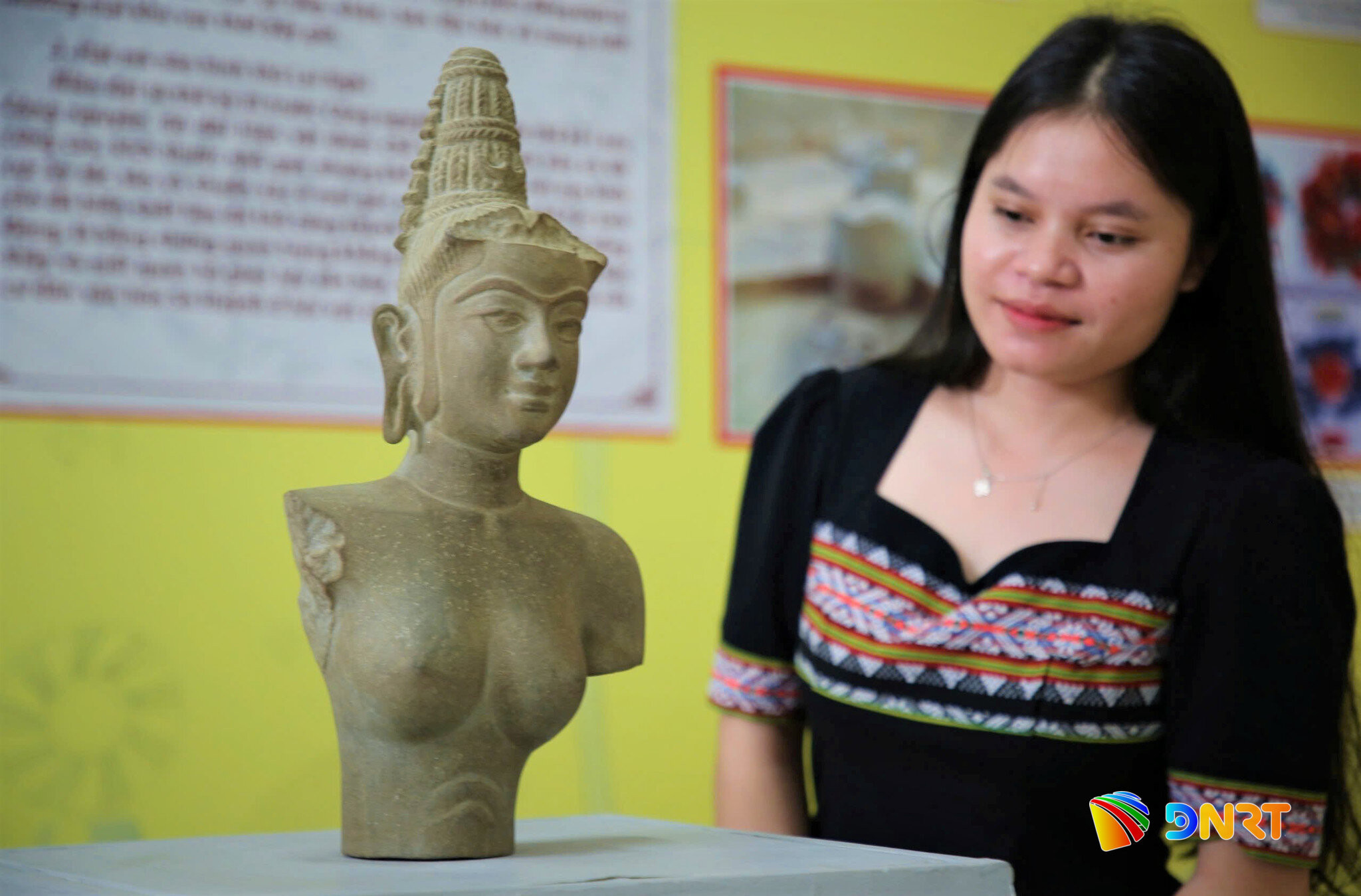
Alongside it is a replica of the statue of Goddess Devi. It is considered one of the most typical female deity sculptures of 10th-century Cham visual art.
Unveiling traces of maritime trade activities in the past
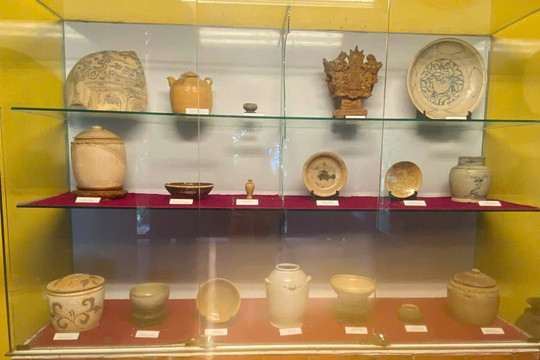
At the exhibition, collector Luong Hoang Long introduces the thematic session “From a Private Collection to the Mysteries of the Maritime Silk Road”, featuring 70 ceramic artifacts from a ship wrecked in Cham Islands (Da Nang now) dating back to the 15th - 16th centuries.
Reportedly, the ship set sail from Thailand toward Van Don Port (Quang Ninh) for trade activities, carrying a massive cargo of ceramics produced at the Chu Dau kilns in Hai Duong (Hai Phong now).
While navigating the waters off Cham Islands, the ship encountered rough seas and strong winds and consequently sank to the seabed. Traces of the wreck gradually came to light when local fishermen, while trawling, inadvertently hauled up oyster-encrusted ceramics.
Following the increasing discoveries of ceramics from the Cham Islands shipwreck, domestic and international specialized agencies collaborated to survey and excavate the site. Until now, over 240,000 intact artifacts, along with thousands of pieces of debris, were raised from the ocean floor.
According to collector Luong Hoang Long, this trove of antiquities reflects the richness of Chu Dau ceramics across diverse forms such as bowls, plates, pipa (pear-shaped) vases, and ewers.
Alongside, the artifacts display a wide variety of glazes, ranging from white, blue-and-white, celadon, and crackle glazes to brown, green, pale yellow, and three-color glazes.
On each piece, motifs are shown with fluidity and balance across varied themes and styles, vividly depicting the landscape and people of 15th-century Dai Viet.
The collection helps illuminate ancient ceramic-making techniques, the artistry of early craftsmen, and Dai Viet's integration into regional and international maritime trade networks during the heyday of the Hoi An trading port in the past.
In addition to the ceramic collection, the thematic showcase also features 88 antiquities from the "Vietnamese Flow" thematic collection owned by collector Pham Van Phat, Chairman of the Quang Nam UNESCO Club for the Research and Collection of Antiquities.
The exhibition lasts unitil on November 25.
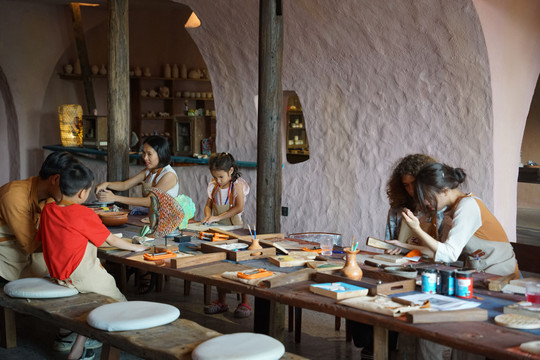
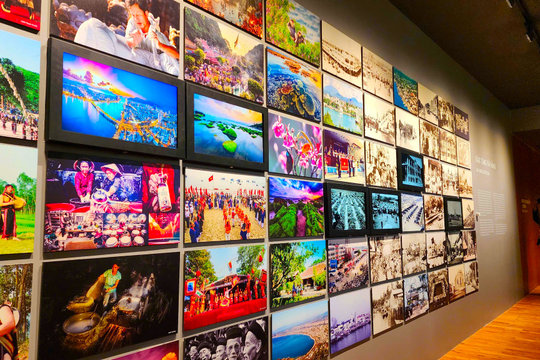
Through its archaeological collections, historical narratives and interactive programs, the exhibition offers a closer look at the cultural layers that have shaped Da Nang over centuries and highlights the role of museums and private collectors in safeguarding the region’s heritage.