


Gửi bình luận
DNO - Renowned for its six limestone peaks rising from the coastal sands, the Marble Mountains in Da Nang represent a heritage complex that brings together geological, archaeological, historical, religious and artistic values.
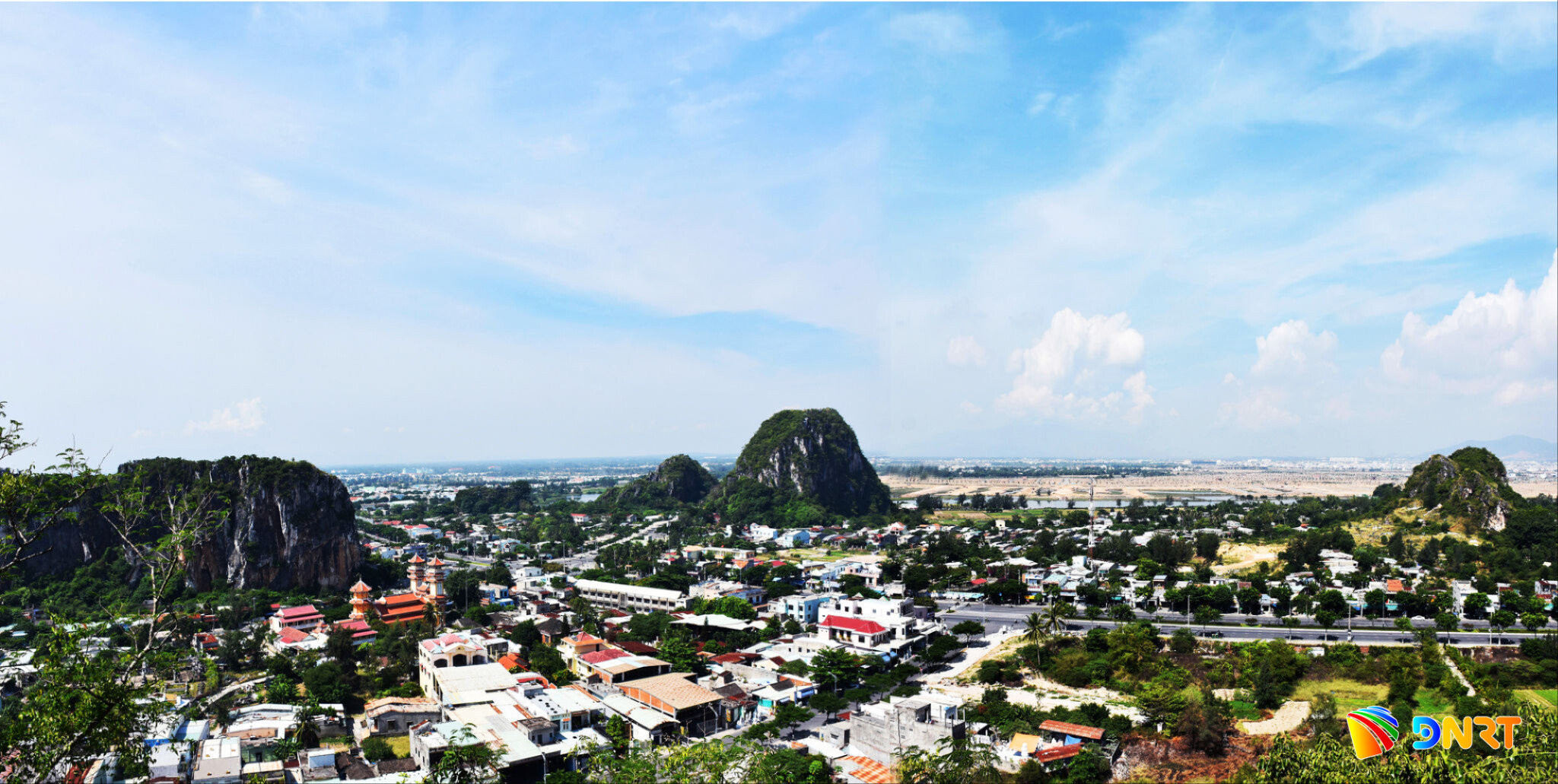
The Marble Mountains site is a unique geological formation in Vietnam, bearing clear traces of geological movements and changes in the coastal landscape over time.
According to research on geological evolution, the site originated from a group of nearshore limestone islands which was formed during the Holocene epoch, about 5,000 - 6,000 years ago. As sea levels gradually receded, the limestone islands became connected to the mainland, forming the cluster of mountains seen today.
Notably, while much of the region south of the Hai Van - Bach Ma mountain range is composed primarily of granite, the Marble Mountains consist of limestone that has undergone metamorphism into marble.
Over time, the effects of water, wind and weathering have contributed to the formation of caves and unique natural landforms.
These geological characteristics give the Marble Mountains its distinctive appearance while reflecting the geological evolution of Vietnam’s central coastal region.
In terms of geomorphology, the Marble Mountains are situated within a landscape where mountains, rivers and the sea blend harmoniously.
The limestone peaks rising from the coastal plain, together with their connection to the Co Co River and the East Sea, form a distinctive landform. The area serves as a transition between mountainous terrain and lowland plains while opening up a landscape where waterways meet the open sea.
This geographical setting contributes to the area’s distinctive scenic appeal and reflects the close relationship between geological processes, changes in the coastline and the development of local settlements.
One of the Marble Mountains’ most outstanding values lies in the accumulation of religious and cultural layers over successive historical periods. Its caves, particularly those on Thuy Son (Water Mountain), contain not only extraordinary natural scenery but also numerous valuable artifacts.
Among the most notable discoveries is an altar pedestal dedicated to the Bodhisattva Vajrapani. Found in Tang Chon Cave, it bears the artistic characteristics of the Dong Duong style.
The artifact reflects the interaction between Champa art and Esoteric Buddhism, indicating the Marble Mountains as a vital religious center in the past.
From the 17th century onward, the Marble Mountains developed into a major Buddhist center in Dang Trong, the southern realm of Vietnam under the Nguyen lords. During the reign of King Minh Mang in 1825, Tam Thai Pagoda and Linh Ung Pagoda were rebuilt and designated as national pagodas.
The site is also home to other pagodas, including Tu Tam, Tam Ton, Pho Da, Linh Son and Quan The Am.
Notably, Quan The Am Pagoda now houses the Museum of Buddhist Culture which preserves hundreds of valuable artifacts. Many of its statues possess significant artistic merit, reflecting the development of Vietnamese Buddhist art.
The Marble Mountains can be regarded as a quintessential example of the sacred landscape of Quang land where every layer of rock, every cave and every inscription carved into stone carries memories of the time.
The convergence of natural landscapes, traces of ancient settlements, evidence of trade and accumulated cultural and religious heritage has created a distinctive space rich in cultural identity.