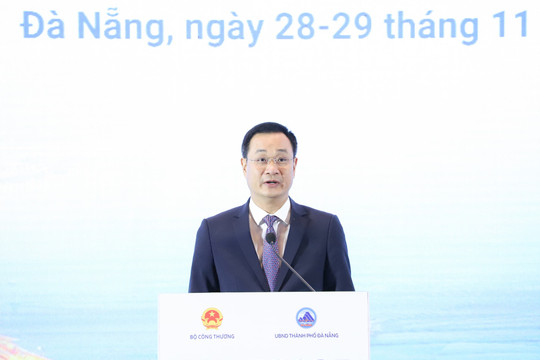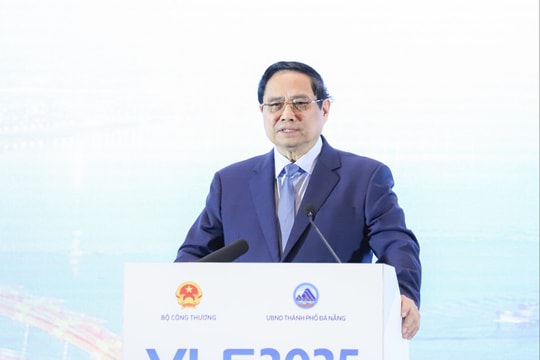
.jpg "Vietnamese PM Pham Minh Chinh attends Vietnam Logistics Forum 2025 in Da Nang")
Gửi bình luận
DNO - The favorable circulation of goods in the East-West Economic Corridor (EWEC) is creating new momentum for the development of Central Vietnam. For its part, Da Nang is striving to promote regional connectivity and logistics cooperation to strengthen its role as the gateway of the EWEC.
.jpg)
The EWEC is one of the three main economic corridors of the Greater Mekong Subregion (GMS), stretching 1,450 km through Myanmar, Thailand, Laos and Vietnam. This route helps shorten the time for transporting goods from Central or Northeastern Laos to the East Sea to just two or three days.
As part of key GMS cooperation programs, the EWEC is strongly funded by the Asian Development Bank (ADB) for infrastructure, planning and technical assistance, and plays a vital role in the economic, trade and logistics corridor within ASEAN.
According to the leaders of Da Nang, logistics is not only a supporting tool but also an important driving force for boosting regional connectivity and effectively unlocking the potential of seaports, airports, border gates and strategic transport networks.
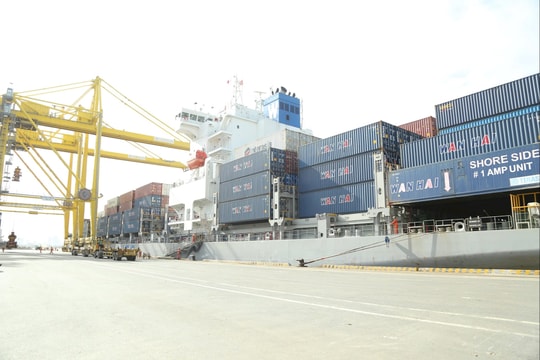
In that picture, Da Nang acts as the core hub and growth engine for logistics across Central Vietnam. With its strategic geographical location at the heart of the country and its comprehensive network of seaports, airports, roads, railways, industrial parks and high-tech parks, the city serves as the maritime gateway for the Central and Central Highlands and GMS provinces, as well as an important junction along the EWEC.
.jpg)
According to Director of the municipal Department of Industry and Trade Le Thi Kim Phuong, Da Nang is focusing on six key orientations: perfecting institutional frameworks and preferential policies; enhancing infrastructure efficiency; adjusting planning to support investment; developing aviation logistics; promoting international investment; and improving the investment environment.
Da Nang also aims to expand the road connecting EWEC to the Middle East and the Indian Ocean in a bid to form a transport corridor linking the city with these regions and facilitate the movement of goods from Asia to Africa and Europe.
Ms. Phuong hopes that once infrastructure is fully developed, the institutions are open, human resources are well prepared and localities join hands with businesses, the logistics sector in Central Vietnam will make a breakthrough, firmly affirming the city's position on the national and regional logistics map.