
![[Infographic] What’s on in Hoi An for Tet 2026](https://bqn.1cdn.vn/thumbs/540x360/2026/02/01/1.jpg "[Infographic] What’s on in Hoi An for Tet 2026")
.jpg "Bui Thi Xong: From boatwoman in Hoi An to “the world’s most beautiful grandmother”")
Gửi bình luận
DNO - Da Nang is positioning itself to become a multi-center creative cultural city, where cultural heritage and modern innovation function as a single development platform rather than parallel sectors.
The city’s administrative expansion has not only enlarged its territory but also widened its growth model, integrating technology, events, digital content, traditional crafts, architecture and living cultural practices.
As assessed by Associate Professor Nguyen Thi Thu Phuong from the Vietnam Institute of Culture, Arts, Sports and Tourism, Da Nang is moving beyond the traditional single-core urban model toward a layered creative structure already proven effective in global cities.
The central areas such as Hai Chau, Son Tra and An Thuong will continue to act as creative engines driven by advertising, music, festivals and the MICE industry, similar to Seoul’s Gangnam-COEX ecosystem.
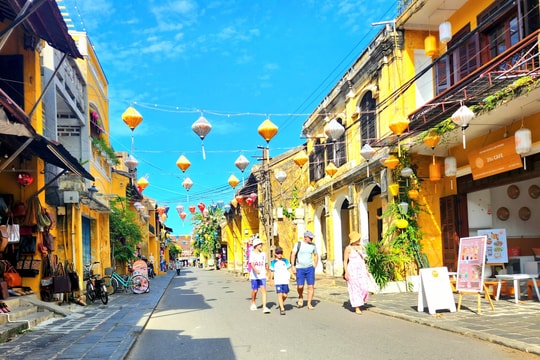
Meanwhile, Hoi An will form the cultural core of the expanded city. Traditional artisans, vernacular architecture and community rituals provide the cultural depth often missing in modern urban areas, comparable to Kyoto’s role in Japan’s Kansai region where heritage fuels contemporary design and cultural tourism.
Peripheral areas including Dien Ban are envisioned as production and logistics zones supporting studios, fabrication centers and creative services, functioning like Incheon in South Korea’s content industry supply chain. Together, these three spatial layers create a full cultural value chain from inspiration and design to production, communication and consumption.
Professor Kang Hyun-jong, Head of the Department of Character and Animation at Yuhan University (South Korea), proposed an even more ambitious vision: develop the world’s first interactive traditional beachfront art park by transforming one kilometer of My Khe Beach into the world’s first interactive traditional art park.
Augmented-reality sand sculptures, LED digital art exhibitions, Cham-inspired sculpture gardens, AI-synchronized ocean mapping projections and 500-drone storytelling performances would create a large-scale cultural experience.
Nighttime immersive performances could also be staged at the Marble Mountains by utilizing the natural caves and limestone cliffs to form what would become the world’s largest natural theater.
The entire mountain would turn into a vast projection canvas showcasing Vietnamese history and mythology, while visitors walk through the caves and experience Vietnam’s stories through animation.
Investing in major flagship cultural events
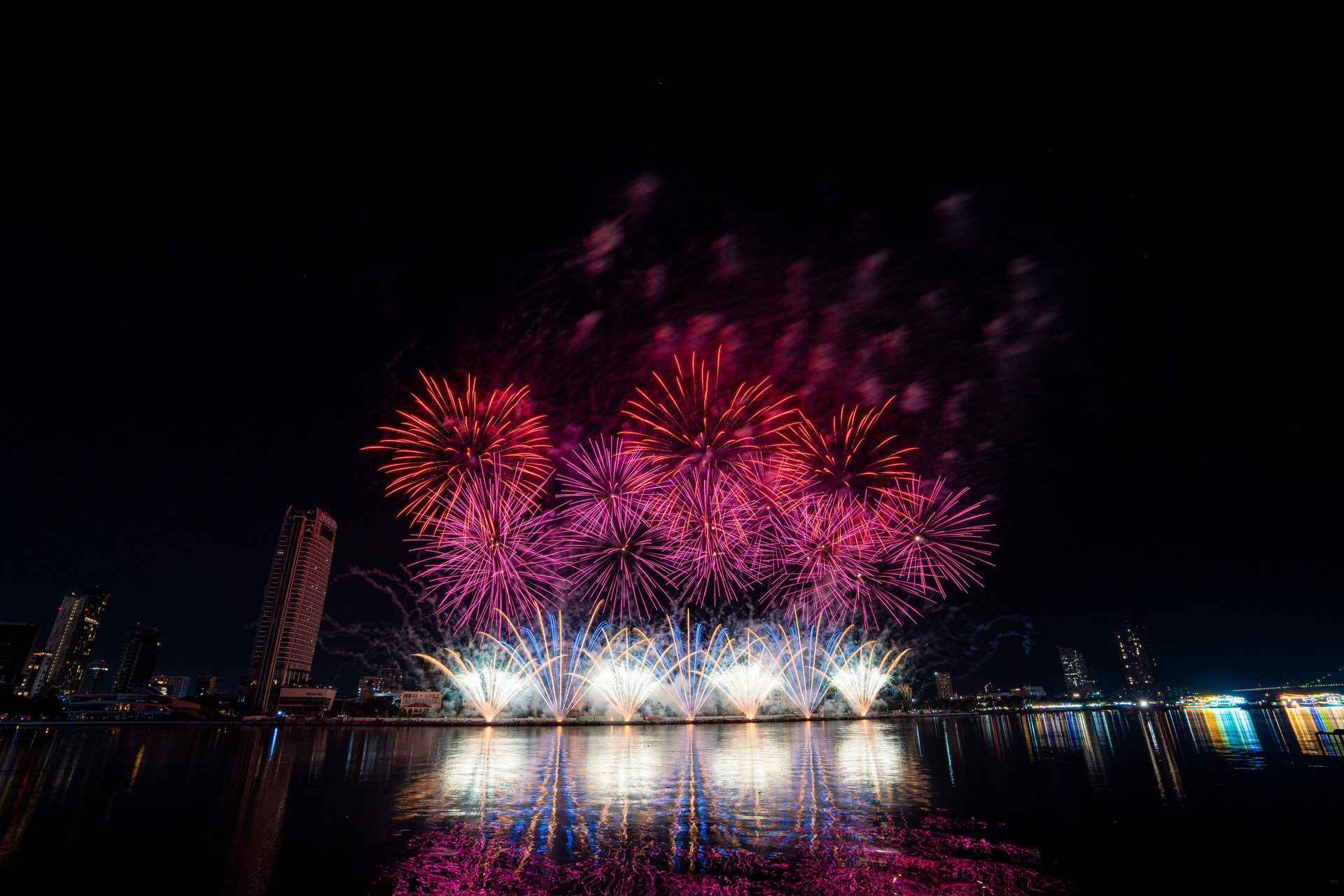
Da Nang is being encouraged to invest in flagship cultural events as part of its broader strategy to develop a creative cultural city. Associate Professor Nguyen Van Thang Long from RMIT University Vietnam pointed to Sydney’s Vivid Sydney as a successful model, where the city integrates light projections, music performances and professional forums into a single large-scale festival.
Inspired by this approach, Da Nang could consolidate its numerous cultural festivals into a two-week signature event held in November and December, when weather conditions are most favorable.
He proposed building the brand “Da Nang - Bright, Green, Clean.” Bright represents transforming urban landmarks through 3D mapping and creative lighting. Green focuses on environmentally responsible events using sustainable technologies.
Clean emphasizes civic culture, professional performance standards and a welcoming public environment. A clear identity would help attract investors, international studios and training programs in the creative sector.
In addition, the city should strengthen links between government, universities, artists and creative enterprises. Regular dialogue would allow creators to co-design policies and contribute practical expertise. Repurposing existing facilities into creative spaces would also reduce waste and expand opportunities.
If realized, Da Nang could emerge as Central Vietnam’s leading creative metropolis, a place where identity and innovation jointly drive sustainable growth in the cultural industry era.