
Gửi bình luận
DNO -There is a South Korean man who loves the Vietnamese language and literature so deeply that he considers it his life’s destiny, serving as a steadfast bridge between two cultures.
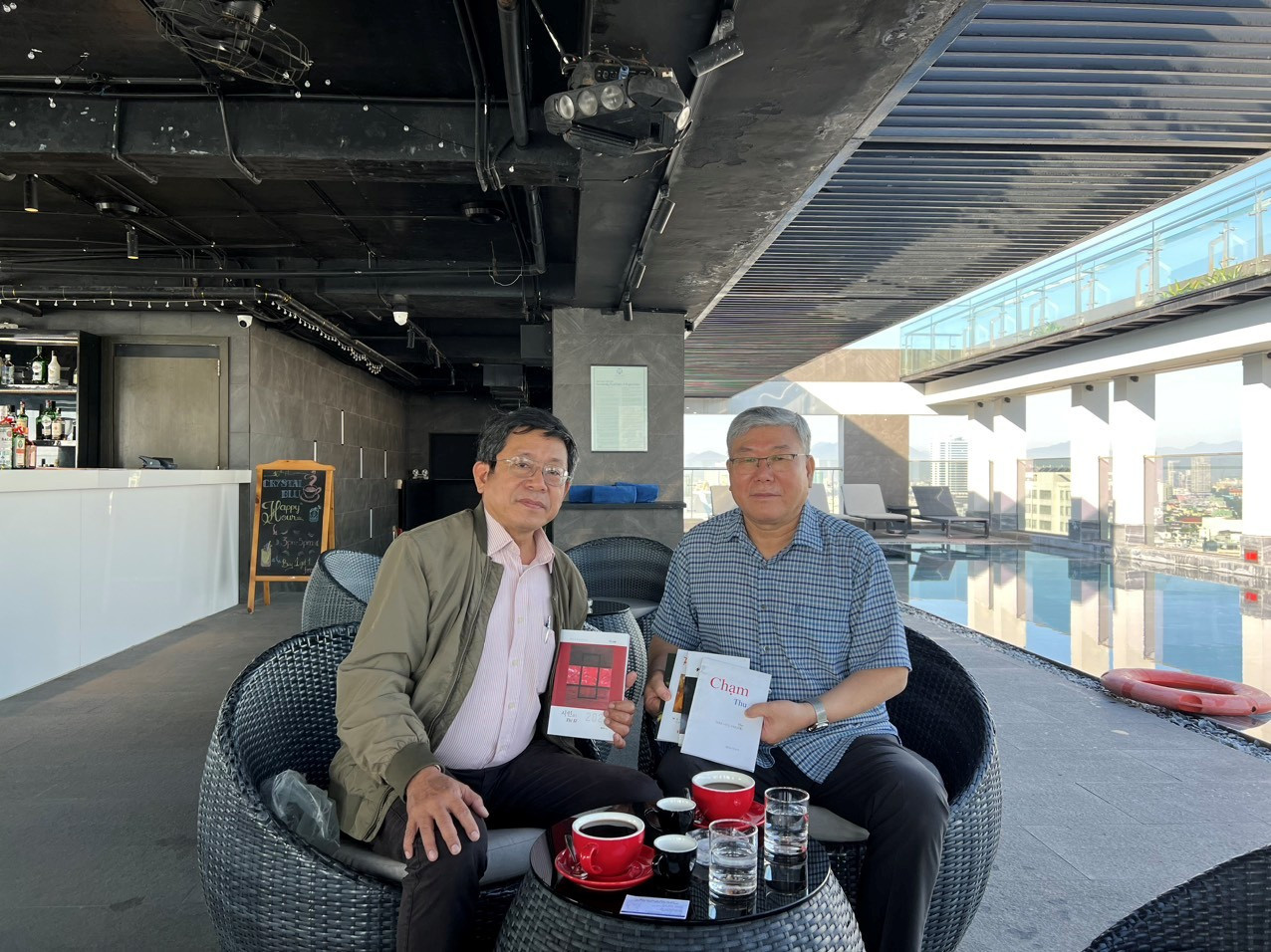
Prof. Dr. Bae Yang Soo is the first South Korean scholar to attain both a professorship and a doctorate in Vietnamese literature. He currently serves as the Dean of the Department of Vietnamese Studies, from Busan University of Foreign Studies, South Korea.
Deep impression with the Vietnamese language
Speaking Vietnamese with impressive fluency, Mr. Bae once shared how he became attached to the language and how difficult the journey had been. After graduating from high school, Bae enrolled at the Hankuk University of Foreign Studies in Seoul (1984 - 1988).
At the time, South Korean students studying Vietnamese knew little about Vietnam beyond vague television images. To learn more, they searched for scarce tapes and materials about the country.
After graduation, the young Vietnamese-language major struggled to find work in South Korea. Then an opportunity arose as a South Korean seasoning company was recruiting Vietnamese speakers for positions in Ho Chi Minh City. Bae seized it without hesitation.
Ho Chi Minh City greeted him with a light, unexpected rain one late afternoon. From the car window, he could read Vietnamese street signs along the road. The moment felt strangely warm and familiar, less like arriving somewhere new than returning home. In that instant, he sensed that Vietnamese was not merely a career choice, but a destiny.
An ambassador of Vietnamese literature
Through daily contact and by listening to the rhythms of ordinary life, Mr. Bae began to notice deep affinities between South Korean and Vietnamese cultures.
To understand those similarities fully, however, he realized he needed a far stronger command of the Vietnamese language. With strong determination, he saved money and chose to remain in Vietnam for the long term to pursue advanced study.
In 1992, after securing enough financial support, Mr. Bae applied for a master’s degree in literature at the Ha Noi National University of Education.
That same year, in December, Vietnam and South Korea officially established diplomatic relations, a milestone that opened what he describes as a promising new path for his future.
After completing his master’s degree (1992-1994), Mr. Bae continued as a doctoral candidate and earned a PhD in Vietnamese literature between 1995 and 2001, becoming the first South Korean to pursue doctoral studies and receive a PhD in Vietnam.
Returning home, he began teaching Vietnamese language and literature at Busan University of Foreign Studies, later serving as Head of the Vietnamese Department and Director of the university’s Asian Studies Institute.
In 2002, he helped found Vesamo, a voluntary organization bringing together scholars, writers, journalists and businesspeople devoted to Vietnam, contributing significantly to strengthening South Korea-Vietnam friendship.
He also translated major Vietnamese literary works directly into Korean and authored numerous research publications on Vietnamese culture, while supporting charitable projects for disadvantaged children in remote areas of Vietnam.
Over the past decades, in addition to teaching Vietnamese language and literature and translating Vietnamese literary works into Korean, Mr. Bae proposed that an institute under South Korea’s Ministry of Culture authorize the establishment of the website www.vietnamkorea.org, aimed at fostering exchange and introducing the literature of both countries in Vietnamese.
He has also authored and co-edited numerous research works on Vietnam, including The Beauty of Vietnamese Culture, Vietnamese People and Culture, People and Culture of Southeast Asia, and Understanding Vietnam.
Alongside academia, Prof. Dr. Bae has actively supported charitable initiatives, mobilizing resources to build boarding facilities for disadvantaged children in remote areas of Vietnam.
Prof. Dr. Bae Yang Soo’s journey is one of perseverance and profound cultural devotion. More than an academic, he has become a living bridge between South Korea and Vietnam, proving that language, when pursued with passion and respect, can transcend borders and shape lasting friendship between nations.