


Gửi bình luận
DNO - As Da Nang expands its international tourism markets, strengthens global partnerships and attracts foreign-invested businesses, foreign-language proficiency is becoming an increasingly important part of education and professional development.
.jpg)
New regulations from the Vietnamese Ministry of Education and Training allow schools to voluntarily organise second foreign-language programmes, including Russian, Chinese, French and Japanese.
According to the Da Nang Department of Education and Training, the teaching of second foreign languages is being expanded based on students’ needs and individual schools’ conditions.
Alongside English, schools continue to offer Japanese and French, while Korean is being introduced at more lower and upper secondary schools. Demand for Korean and Chinese has also increased in recent years.
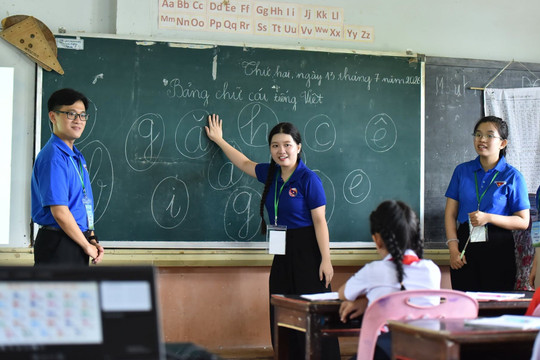
At Nguyen Luong Bang Secondary School, Japanese has returned this academic year as a second foreign language after several years off the timetable. The school has nearly 4,000 students across 88 classes and has initially opened two Japanese classes for 71 students. Support and guidance from the Consulate-General of Japan in Da Nang have also helped the school develop its programme.
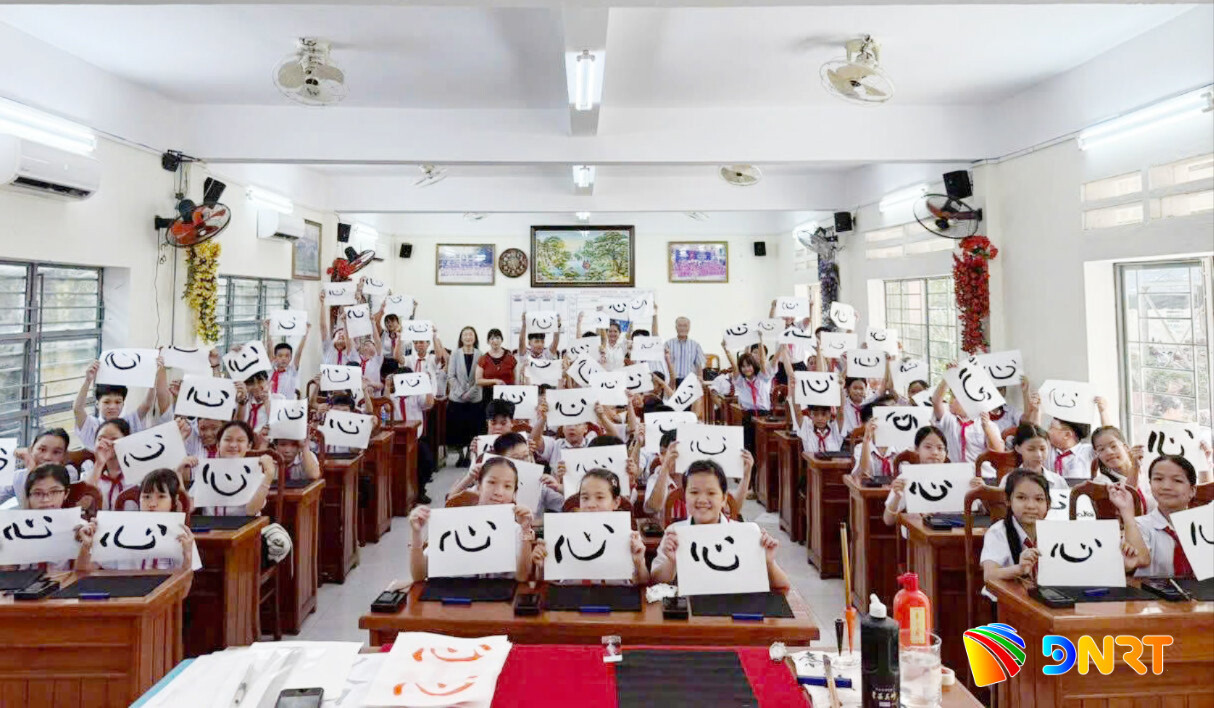
For French, a similar approach could be developed through stronger exchanges with Francophone organisations, universities and French-speaking businesses.
According to Ho Ngoc Hung, Principal of Nguyen Hue Secondary School, greater opportunities for exchange and practical experiences could help students better understand the real-world value of French.
Da Nang is expanding opportunities for people to use foreign languages in academic and community settings.
At the University of Foreign Language Studies, the University of Da Nang, the use of English is being strengthened through international conferences, language events, professional development and academic cooperation. The university is also exploring digital technology and artificial intelligence in language education.
At the VietTESOL 2026 international conference, themed “Repositioning English: From Foreign Language to Second Language”, educators discussed the changing role of English in education.
The University of Foreign Language Studies is turning English into a tool for communication, learning, research and global engagement. It is also strengthening international academic partnerships and exploring digital technology and AI in language education to prepare learners for global integration.
Assoc. Prof. Dr. Nguyen Van Long, Rector of the University of Foreign Language Studies
.jpg)
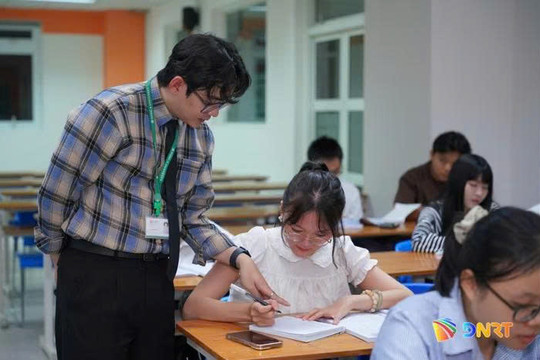
In August 2026, the Dong A University, in cooperation with the Korean Language Center in Ho Chi Minh City under Korea’s Ministry of Education, organised free Korean courses for Da Nang residents. The programme attracted 110 learners, ranging from students to working adults.
Meanwhile, annual events such as the Vietnam-Japan Festival and Vietnam-Korea Festival give residents, students and businesses opportunities to interact with international organisations and communities.
For many years, English was regarded as the basic foreign language for Da Nang’s workforce. But as the city’s international tourism markets become more diverse, employers are increasingly looking for people who can communicate with visitors from specific markets.
Nguyen Son Thuy, Director of Visit Indochina, said Da Nang is welcoming visitors from Indonesia, Malaysia, the Middle East, India, Russia and the CIS countries.
The city’s tourism promotion sector has responded by providing English, Korean and Russian training, together with communication, hospitality and cultural knowledge, for visitor-support staff and tourism cyclo drivers.
The Russian and CIS market illustrates this need. According to ANEX Vietnam, the long-stay nature of this market helps fill an average of 5,200 hotel rooms per day nationwide, while its network is bringing visitors from 11 Russian and CIS cities directly to Da Nang.
Vo Thai Minh, Contract Director at ANEX Vietnam, said the company aims to serve 98,000 visitors in Da Nang in 2027. Achieving that goal, however, requires more than tourism products and infrastructure. It also requires a capable workforce, including employees who can speak Russian.
.jpg)
The demand extends beyond tourism. For foreign-invested companies, particularly in technology, engineering and aerospace, foreign-language proficiency is increasingly inseparable from professional expertise.
According to a representative of KP Aerospace Vietnam, a member of South Korea’s KP Aero Industries, engineers and technical staff need specialised knowledge, technological expertise and foreign-language skills. In a multinational workplace, an engineer may need to read technical documents, communicate with international partners and resolve professional problems in another language.
This shift places greater emphasis on cooperation between educational institutions and businesses. KP Aerospace Vietnam has expressed a desire to strengthen partnerships with universities in training high-quality human resources and to give students opportunities to work on real engineering problems while they are still studying.
As Da Nang deepens international cooperation, expands tourism markets and attracts foreign investment. The long-term objective is not simply to produce people who speak more languages, but a workforce capable of using languages alongside professional knowledge.