
Gửi bình luận
DNO - Traditional Co Tu brocade weaving preserves generations of knowledge, from spinning yarn and extracting natural dyes to creating intricate patterns. Passing these skills to younger generations is essential to safeguarding the craft and cultural identity.
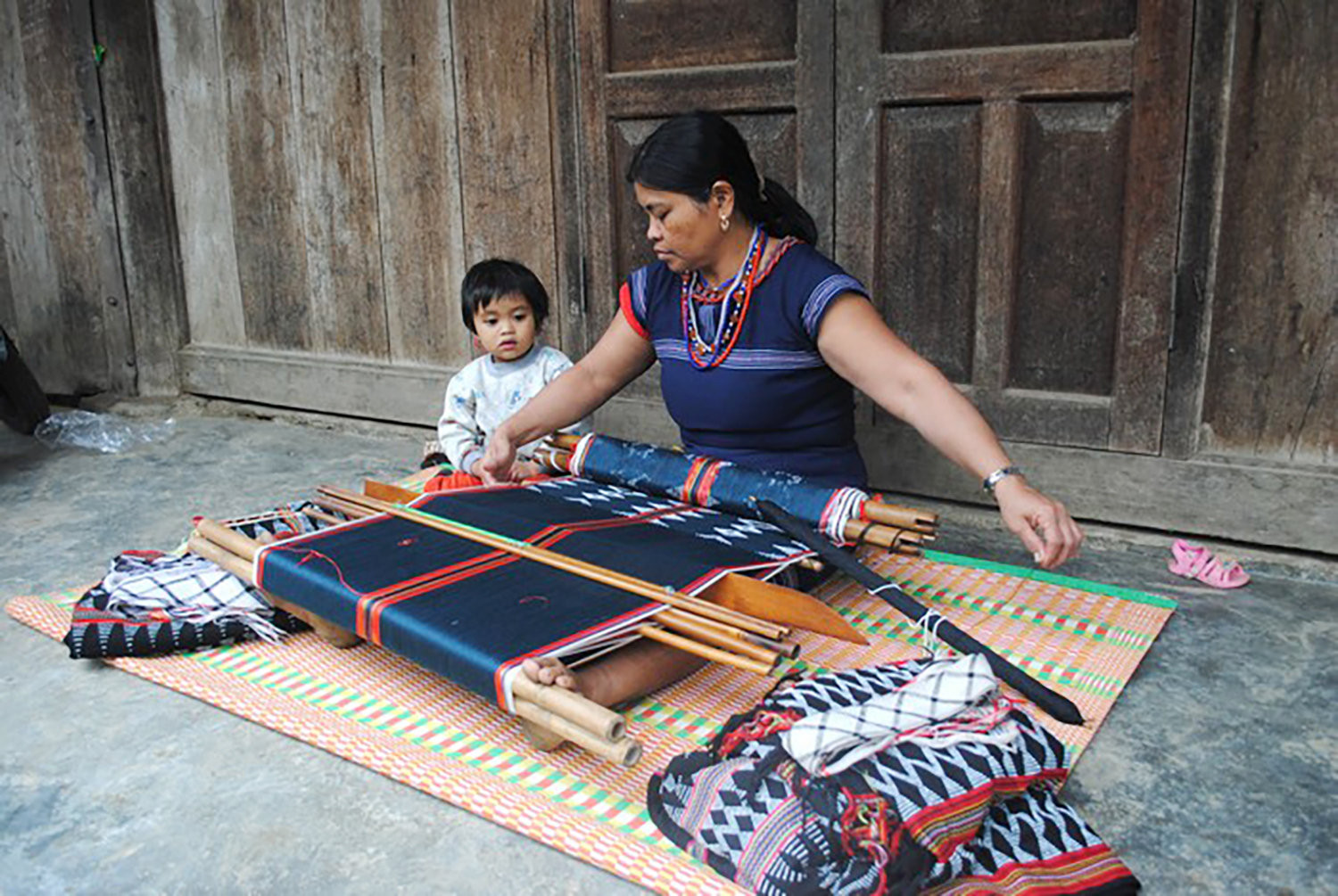
From forest plants to fabric
Having spent nearly 40 years weaving, Bling Treng, a Co Tu artisan in Dong Giang Commune, continues to preserve techniques passed down by her mother.
She started learning when she was 14 and became an expert at preparing yarn, dyeing it with natural dyes, and making traditional patterns.
In the past, Co Tu women processed cotton, spun yarn and extracted dyes from forest plants. Indigo and black dyes came from the ta-ram plant, soaked in water for three days. Producing deep black required dyeing for up to a month.
Wavy patterns on dark fabric background were created by tying sections of indigo-dyed yarn with leaves before dyeing them black, allowing the covered sections to retain their color.
Preserving traditions through tourism
Community-based tourism and production partnerships are creating new opportunities to preserve Co Tu weaving while generating income.
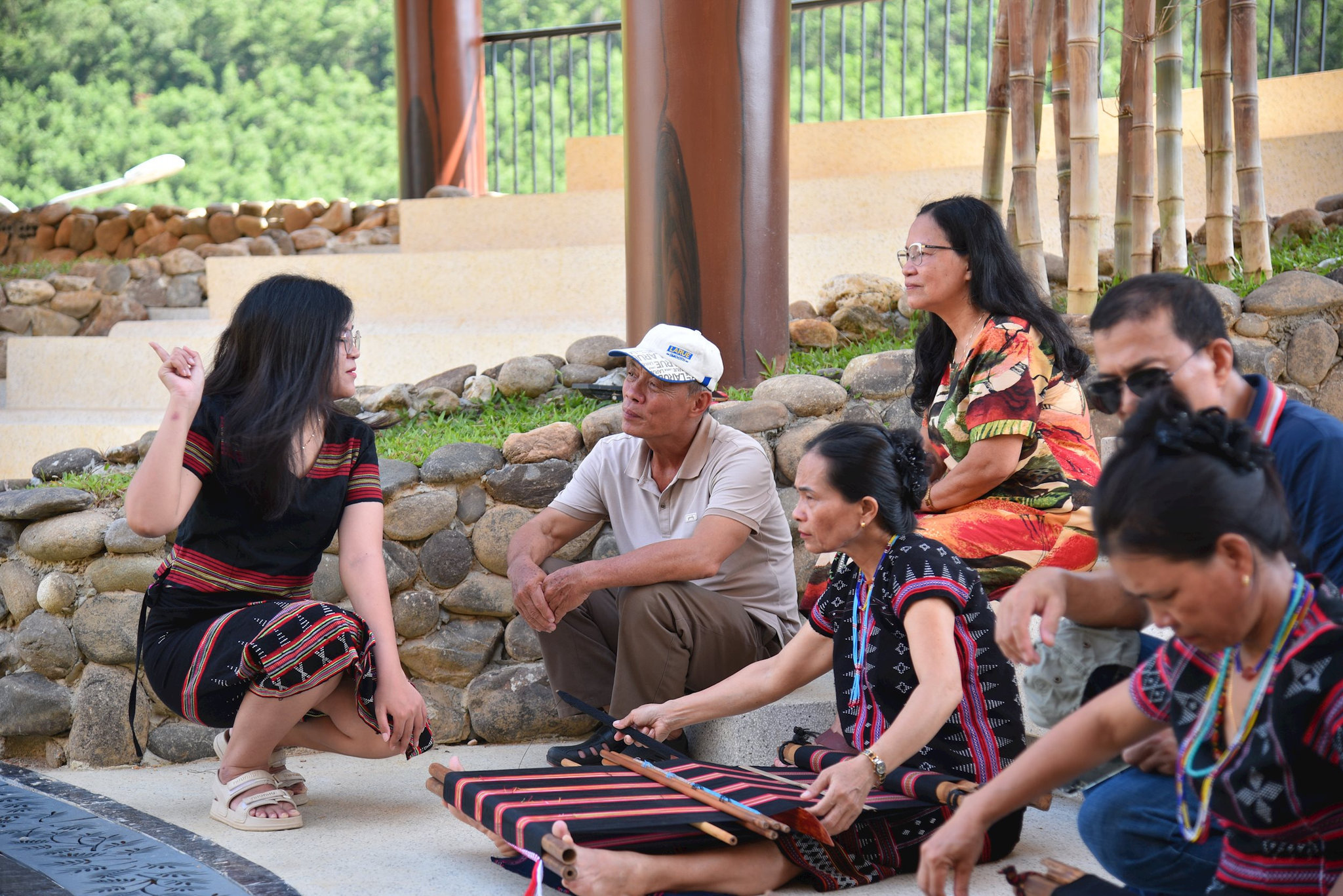
Dinh Thi Thu Thanh, a young Co Tu woman residing in Hai Van Ward, has established the Hoa Bac Brocade initiative, aimed at connecting local women with tourists through weaving demonstrations and cultural experiences.
Thanh believes traditional techniques should be preserved through festivals and cultural activities, while commercial production needs improvements to reduce costs and meet market demands.
Nguyen Thi Hai Hau, a lecturer at the Academy of Politics Region III, said industrial yarn helps reduce production costs but may weaken the authenticity of traditional brocade.
She recommended diversifying products, from traditional textiles for collectors to affordable contemporary items.
Hau also stressed that Co Tu communities must remain central to preservation efforts, with artisans supported in teaching younger generations.
Stronger cooperation among local authorities, cooperatives, and tourism businesses would help sustain the craft and provide economic benefits to local communities, she added