

Connection space in Da Nang
DNO - The co-working model is gradually turning desk rentals for shared working environments into spaces for community connection in major cities like Da Nang.
"Shared offices"
Co-working is simply defined as a shared workspace where individuals, project teams, or businesses can use the same physical infrastructure instead of private offices. Users can rent a workspace for daily, weekly, or monthly while gaining access to meeting rooms, the internet, office equipment, and associated amenities.
The demand for co-working space has emerged as Da Nang attracts a large number of experts, tech professionals, startup founders, and those who come to the city to build and develop their own projects. This trend is accompanied by a community of expatriates and digital nomads who leverage technology and the internet for remote working, choosing Da Nang as a place to live and work.
Ms. Tran Hanh Trang, CEO of Enosta Space, one of the first co-working spaces in Da Nang, noted that demand for co-working increased significantly between 2017 and before the outbreak of the COVID-19 pandemic. There was a time Enosta was able to reach full capacity even after expanding its space.
Clients came to Enosta Space with diverse choices. Some rented the space for just a day to meet with customers, while others stayed for a full month. A startup team might start with three or four members and then increase their number of desks as their business grows. "The beauty of co-working is the ability to adapt to each individual's needs," Ms. Trang shared.
The above trend was interrupted for about two or three years by COVID-19. However, this market began to show a clear recovery starting in 2025. Alongside traditional co-working spaces, new models have emerged in Da Nang, such as the combination workspace and accommodation called co-living or space that integrates work areas with coffee shops, including those developed by expatriates in areas like An Thuong.
It is not just the number of users that is growing. Their choices are also shifting. Previously, they focused on rental price, seating capacity, or internet connectivity. At present, their expectations are different. They want to know about the work environment, the profile of existing users, and the available support services, and perhaps most importantly, whether they can find a community there.
Ms. Trang shared, some relationships are begun quite simply, starting with a conversation in a shared area and evolving into a project or a collaborative opportunity. It is a type of value that is difficult for creation in a traditional office where people work in completely isolated spaces.
This shift indicates that the co-working sector is at a turning point: as desks and infrastructure increasingly become standard expectations, the true value of a space lies more in the relationships formed within it. People are moving beyond the mere need for a place to work; they are seeking an environment where they can meet, share, and be part of a community.
Shared house for community connection
Hub Hoi An, located in Cam Chau, positions itself not just as a professional workspace but as a community for self-employed individuals. It is a place where they can work while enjoying the scenery, local daily life, and the cultural heritage in Central Vietnam.
This idea stemmed from the personal experiences of Sarah Kuhlemann, the founder of Hub Hoi An. In 2016, Sarah arrived in Hoi An as a digital nomad. She loved the city's cafes, seaside restaurants, and unhurried pace of life, yet she realized it lacked something she had found in her previous destinations.
Hub Hoi An officially opened its doors in April 2017. The space was designed as a communal home where visitors find not only a desk for work but also shared areas for meeting and conversation.
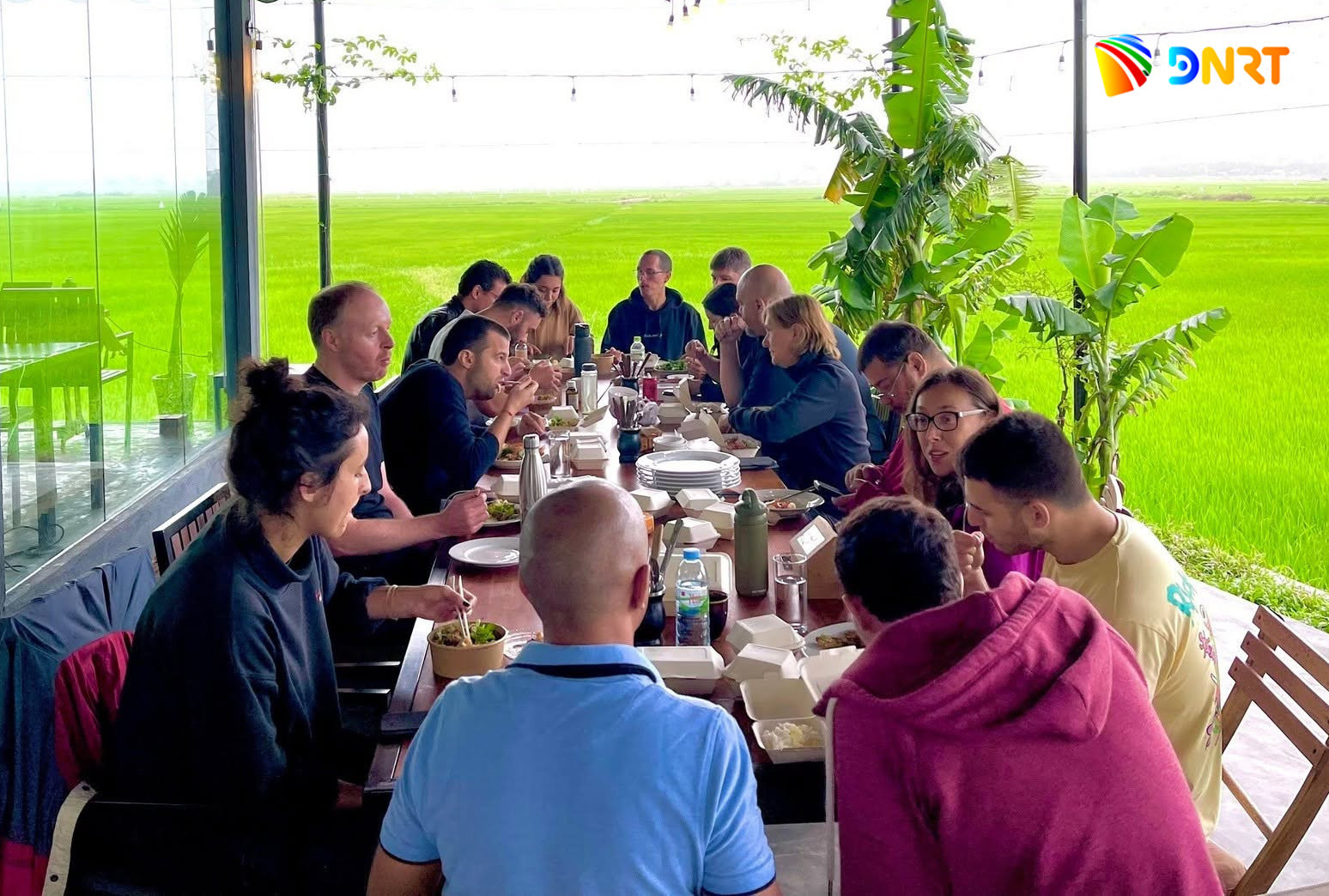
People come here from diverse fields, including yoga, nutrition, online therapy, e-commerce, marketing, writing, design, and IT. Some stay for just a few weeks, while others remain for the long term. They seek colleagues, friends, and sometimes mentors; at other times, all they need is simply someone to share lunch with.
That connection extends well beyond the dining table. After work, people continue to socialize through movie nights, dinners, excursions, yoga and Muay Thai sessions, or beachside activities. “We currently organize over eight activities a week to bring people together,” Sarah said.
From casual break-time chats to after-hours events, the co-working space evolves into something far more than just a place to work. While a desk might be what draws people in, it is the connections forged there that make them want to stay.