

International experts propose solutions for Da Nang to become a regional logistics hub
DNO - Da Nang is actively implementing solutions to develop infrastructure and enhance inter-regional connectivity in order to optimize competitiveness and ensure seamless supply chains.
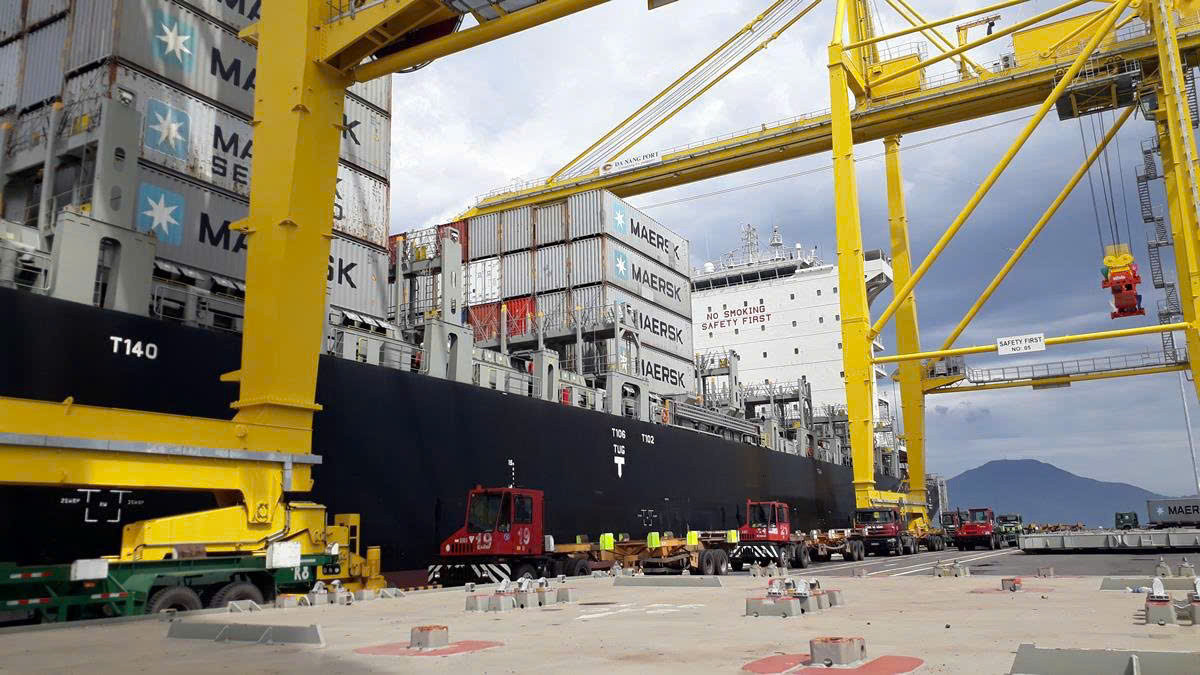
Promoting cross-border transport
Da Nang boasts a strategic location along Vietnam’s north-south transport axis and serves as a connecting point between the Pacific and Indian Oceans.
This transport axis lies entirely within an industrial belt stretching from Shanghai and Shenzhen (China) through Ha Noi, Da Nang, and Ho Chi Minh City (Vietnam), down to Bangkok (Thailand), Malaysia, and Singapore.
Mr. Nguyen Duy Minh, Vice Chairman of the Vietnam Logistics Business Association (VLA), pointed out that transit customs procedures in Southeast Asia remained fragmented due to various multilateral and bilateral agreements.
To attract cross-border transport companies to choose Da Nang as a transit hub, he, therefore, stressed the urgent need to facilitate customs procedures and apply standardized international instruments.
To address this issue, Mr. Wang Ran, Southeast Asia regional representative of the International Road Transport Union (IRU), highlighted the Transports Internationaux Routiers (TIR) Convention.
According to him, TIR is a globally harmonized customs transit system that minimizes physical inspections, and saves up to 92% of waiting time at borders and 50% of transport costs.
Dr. Le Quang Trung, Deputy General Director of Vietnam Maritime Corporation (VIMC), suggested that Da Nang authorities finalize the legal framework for international coastal shipping routes; and continue investment in Lien Chieu Port and satellite ports linked to the Free Trade Zone.
He also laid an emphasis on expanding trade facilitation protocols to allow agricultural products and high-tech goods to be cleared through maritime routes.

Expanding connectivity
To realize the goal of becoming an international logistics hub, Prof. Dr. Thomas Sim, President of the International Federation of Freight Forwarders Associations (FIATA), said that modern logistics competitiveness depended not only on physical infrastructure but also on digital corridors.
He underlined the necessity for Da Nang to promote the use of electronic multimodal bills of lading (eFBLs), secured by blockchain technology and integrated with the international legal framework under the Model Law on Electronic Transferable Records (MLETR).
Meanwhile, Mr. Kelvin Tang, Vice President of Road and Rail, Asia-Pacific, at CEVA Logistics, said Da Nang should implement integrated multimodal logistics solutions.
Mr. Tang proposed connectivity models such as road transport from Da Nang to consolidate cargo for cross-border shipments, as well as sea-air connectivity and short-sea connections to major Chinese ports such as Shanghai and Shenzhen.
Developing an integrated supply chain
Dr. Yap Kwong Weng, CEO of Vietnam SuperPort, a joint venture between T&T Group and Singapore’s YCH Group, said infrastructure determined the competitiveness of the entire economy, rather than merely serving as a tool to reduce transport costs.
He underlined a must-do for the city to develop an integrated supply chain ecosystem in which Lien Chieu, Tien Sa and Chu Lai-Ky Ha ports, together with Da Nang International Airport, high-speed railways and air cargo logistics, are planned and managed as a complete multimodal system.
Assessing the role of development space, Assoc. Prof. Dr. Bui Tat Thang, Chairman of the Vietnam - ASEAN Economic Cooperation Development Association (VASEAN), said the East-West Economic Corridor (EWEC), which linked Vietnam, Laos, Thailand and Myanmar, represented a strategic economic space connecting two oceans.
Da Nang has significant opportunities to become a hub for cargo transshipment, logistics, and trade, serving not only Central Vietnam but also the broader Indo-Pacific region.
These are also major development directions in which the Ministry of Industry and Trade continues to support the city in policymaking and logistics infrastructure development.