

Hiking "Monkey Mountain" in search of the most beautiful primate
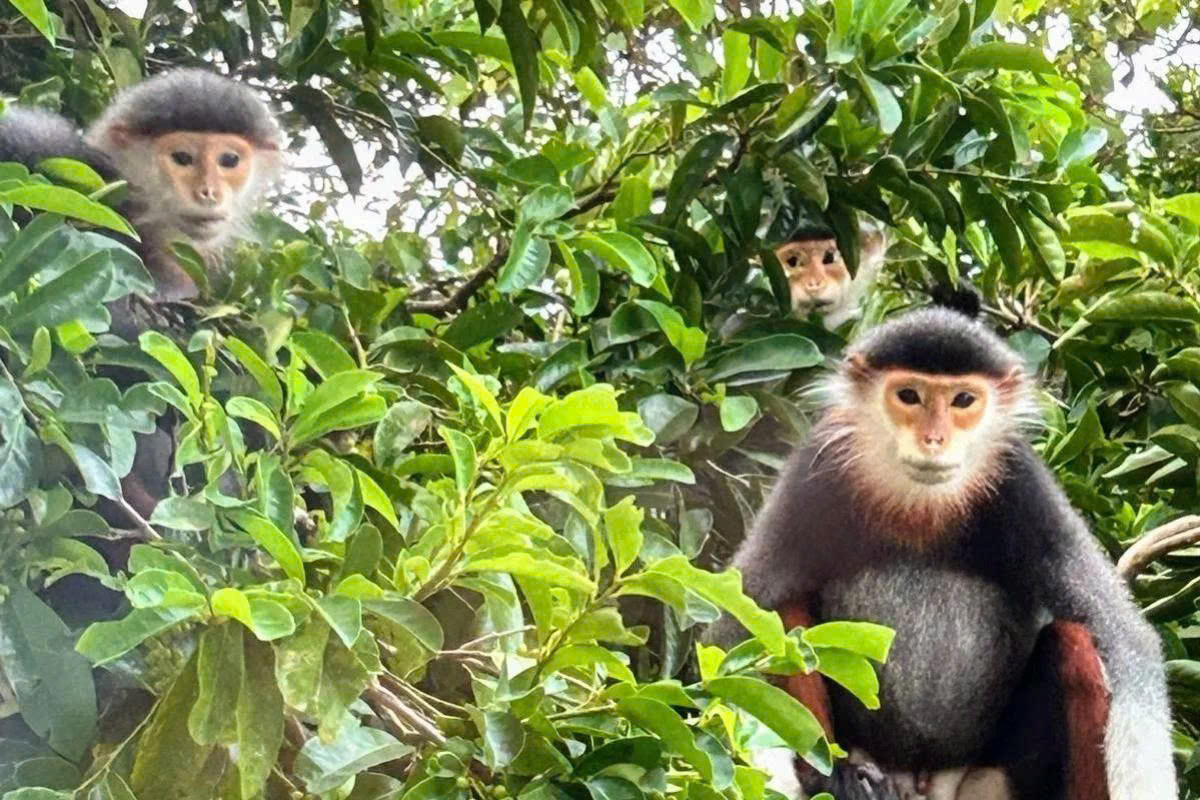
DNO - After hours of trekking the Son Tra Peninsula (Da Nang City, Vietnam), Andrew Sun and his tour guide, Chu Duc Huy encountered a troop of red-shanked douc langurs descending the mountain. It is one of the rarest and most beautiful primate species in the world.
Da Nang has been well-known for its long stretches of beaches, convenient location for combining visits to Hoi An, delicious food and vibrant nightlife. However, according to SCMP, the nature excursions available in the city are underrated.
Located northeast of the city center, Son Tra Peninsula is a nature reserve covering approximately 60 square kilometers. The peninsula's most famous landmark is the 67-meter-tall statue of Avalokiteshvara Bodhisattva at Linh Ung Pagoda, completed in 2010 and becoming a popular tourist attraction.
However, few visitors explore the forest behind the pagoda, which boasts a diverse ecosystem.
According to Andrew telling about Son Tra on SCMP, Son Tra does not actually have many proper hiking trails, in part to protect its animals, including more than 100 types of birds, countless butterflies, deer, snakes, macaques and beautiful but endangered red-shanked douc langurs.
Of the roughly 3,000 of these herbivorous primates left in the world, about 2,000 of them live on the Son Tra Peninsula. They are Son Tra’s main attraction for animal lovers.
.jpg)
Tour guide Chu Duc Huy, from Next Continent, a wildlife consultancy and nature tourism specialist in Vietnam, said, the best time to come is after the rainy season, after February. In April, there could be up to 4,000 varieties of butterflies coming out. Young people are starting to come and hike in groups on Monkey Mountain. It’s a TikTok trend. They come, do videos on the weekend and walk up to the peak.
Itis far from a leisurely feat, though. The climb is about 10km (6 miles) on a road shared with vehicles, reaching a summit of 700 metres (2,300ft). In comparison, Hong Kong’s Victoria Peak is 550 metres. A more efficient way to explore the green setting is to rent a bike or scooter.
Andrew and Huy do part of the excursion by car and partly on foot. The winding road can seem repetitive, but occasional clearings deliver rewarding vistas. On foot, they see numerous oriental garden lizards, with their signature orange hue, sunning themselves on the roadside and on top of barriers.
At the very top is Ban Co Peak. Across from a makeshift refreshment stand is a small set of steps that leads up to a stone sculpture depicting a heavenly scholar forever stumped by an impossible chess problem.
This panoramic clearing is called Chessboard Peak. People can see all of Da Nang, the surrounding mountains and the sea from here on clear days.
Their attention, however, is diverted by a macaque that is lurking around the tree. He is pretending not to notice us, but Andrew and Huy know he is smart enough to associate food with humans, and humans regularly visit this tree.
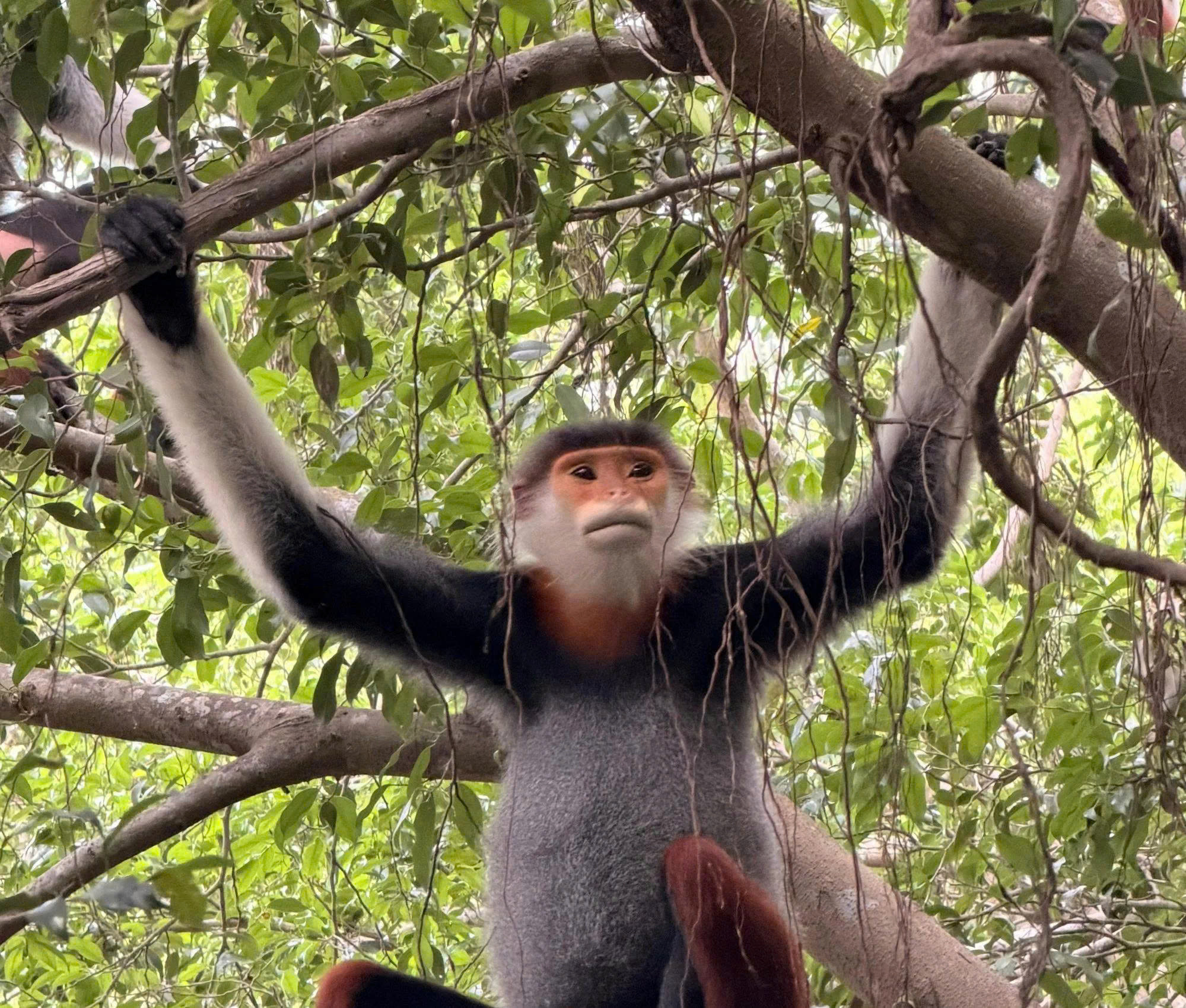
After a bit more reverence for this spectacle of nature, they bid adieu to the monkey and the banyan tree, eager to hike back for some breakfast and a shower at the hotel. An alpha male douc is resting in a tree, while several females and babies are feeding on a higher branch. They advance slowly as the langur appears oblivious to them. He is aware we are not predators and has no interest in our possessions since doucs only eat plants and fruit.
Langurs mostly travel in family groups. This is a standard pack with a couple of younger males, probably offspring of the alpha, chasing each other, leaping several metres from one tree to another.
Meanwhile, the large male remains stoic. Its white beard, black hands, red legs and white tail are striking. No wonder naturalists consider the red-shanked douc among the most beautiful primates. As Andrew and Huy snap pictures, he seems to pose, with limbs akimbo.