

Da Nang holds key advantages for sustainable aviation fuel ecosystem development
DNO - The development of sustainable aviation fuel is becoming an essential requirement of the global aviation industry in its carbon emission reduction roadmap.
In this context, Da Nang is increasingly seen as a locality that possesses many important conditions to gradually establish a sustainable aviation fuel (SAF) ecosystem, from geographical advantages and logistics infrastructure to research capabilities and a green development orientation.
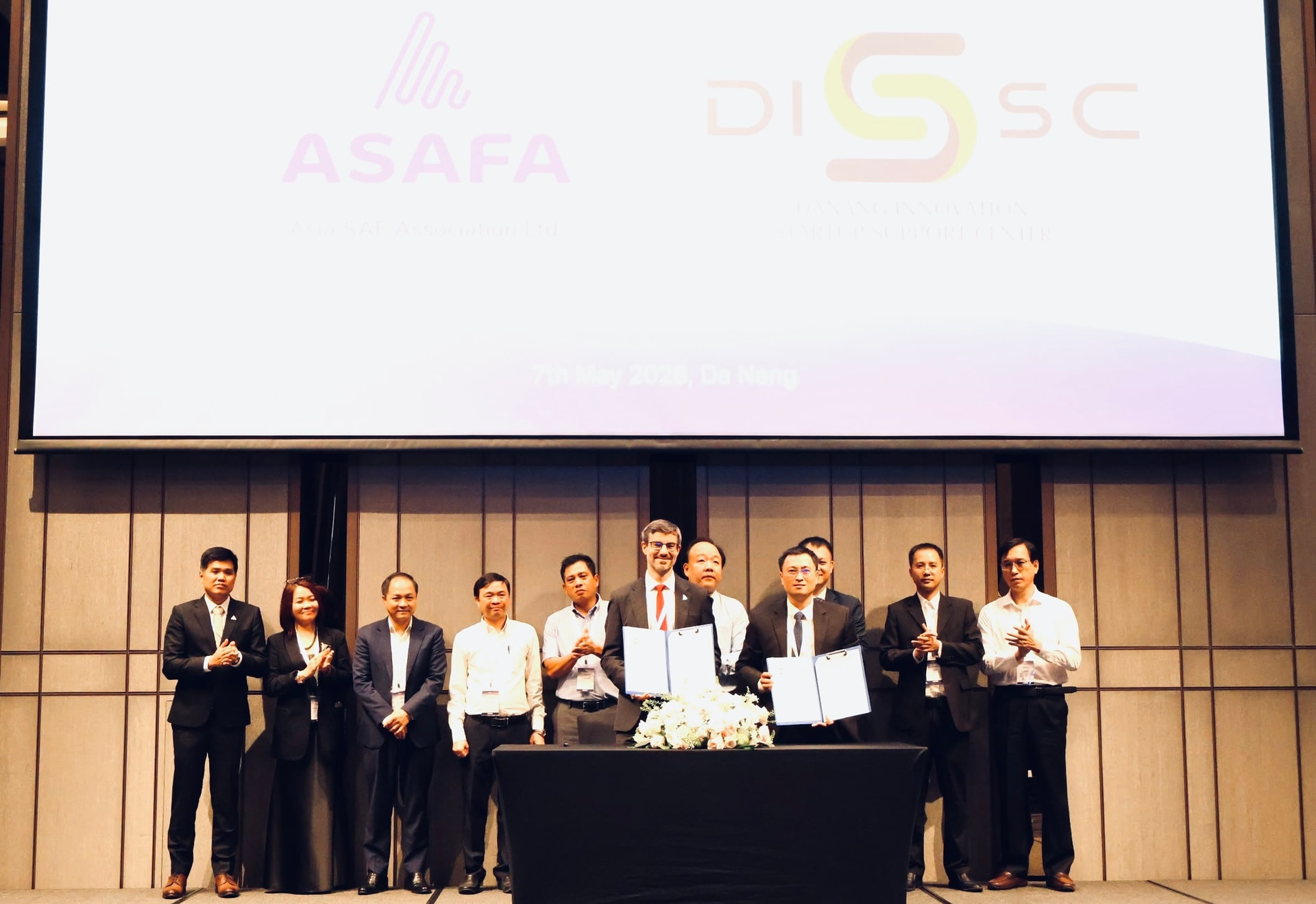
Strong potential for sustainable aviation fuel production
According to experts, SAF is a fuel that replaces traditional fossil-based fuels, produced from agricultural by-products, waste fats, biomass and municipal urban waste, without competing for land used for food production.
Currently, the global aviation industry consumes about 380 million tons of fuel per year, while traditional fuel supplies are increasingly affected by multiple factors, making the search for alternative fuels more urgent than ever.
Vietnam in general, and Da Nang in particular, possess key foundations for building a sustainable and competitive aviation fuel ecosystem.
The first advantage lies in abundant and diverse source of biomass raw materials, ranging from agricultural by-products such as straw and sugarcane bagasse to used cooking oil and urban waste.
Secondly, there is existing industrial capacity with experienced units such as the Petrovietnam Refining and Petrochemical Corporation (BSR).
Thirdly, Vietnam benefits from its strategic location within ASEAN and the Asia-Pacific region.
The feedstock potential for sustainable aviation fuel production remains significant, with Vietnam’s total annual biological feedstock output estimated at 72.4 million tons.
Da Nang’s readiness
To support SAF adoption and emissions reduction targets, Da Nang International Airport is actively coordinating with regulatory agencies to implement related measures.
Alongside the city’s and Government’s broader strategic directions, the airport is promoting infrastructure planning and digital transformation in airport operations through its “Green A-CDM Airport” model.
The initiative helps reduce average aircraft taxiing time from 16 minutes to around 13 - 14 minutes while also enabling accurate calculations of CO2 emissions for each flight in real time.
Mr. Vo Duc Anh, Deputy Director of the Innovation Startup Support Center under the Department of Science and Technology, noted that Da Nang holds numerous advantages in SAF development, as local scientists are already familiar with biotechnology and benefit from having a nearby market, especially after BSR PetroVietnam successfully produced its first batch of sustainable aviation fuel.
The municipal Department of Science and Technology is currently supporting researchers in developing solutions to improve efficiency, and reduce the production cost of SAF.
At present, the Da Nang government is encouraging agencies and localities to directly commission scientists and businesses to solve practical problems facing the city such as environmental and urban issues.
Simultaneously, the city is promoting an open innovation model in which major corporations and enterprises present challenges, the government acts as a connector, and the innovation community contributes solutions.
As the world moves toward a low-carbon economy, leveraging existing advantages could enable Da Nang not only to participate in emerging energy trends but also to gradually position itself as an important link in the region’s sustainable aviation fuel ecosystem.