

Da Nang: Tracing time through bridges spanning Han River
DNO - More than just transportation infrastructure, each bridge spanning the Han River serves as a milestone, marking each stage of transformation of Da Nang over time.
Da Nang is no stranger to wide boulevards, long sandy beaches, and rapidly expanding urban areas. However, if one image were chosen to capture the city’s development story, many would point to the bridges spanning the Han River. Beyond their functional role, these structures serve as living markers of each phase in the city’s evolution.
The Nguyen Van Troi Bridge rests quietly as a witness to history. Built decades ago, it once served during wartime, bearing the imprint of challenging years. As newer bridges emerged, the bridge gradually lost its role as a primary traffic route, but it has been preserved as a piece of collective memory.
Today, its weathered steel structure has been transformed into a pedestrian space where both locals and visitors can come to experience a different side of Da Nang, slower, more reflective amid the modern pace of life.
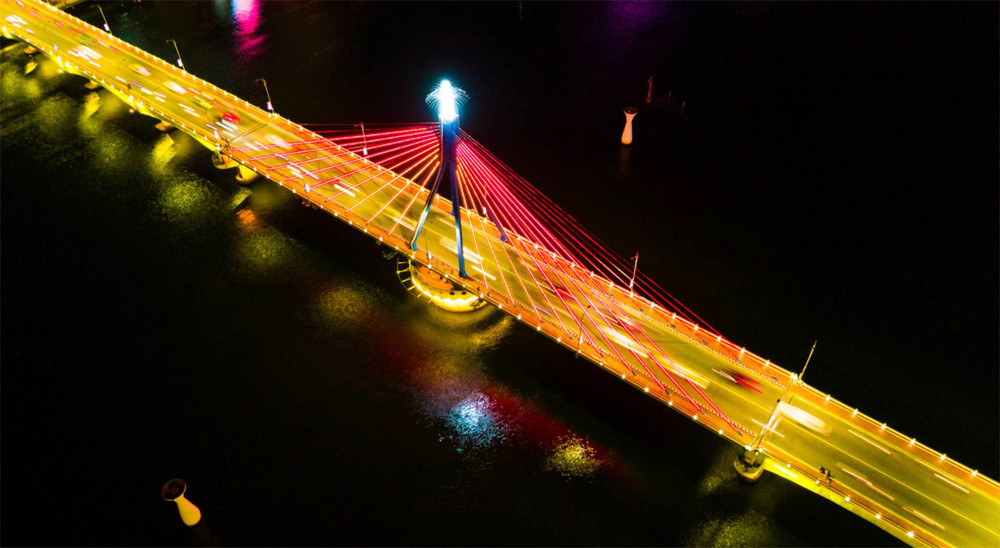
From those memories, the city entered a new phase with the construction of the Han River Bridge, the first swing bridge designed and built by Vietnamese engineers. Its completion not only improved connectivity but also opened up entirely new development opportunities.
Mr. Tran Van Khoa, a long-time resident of An Hai ward, recalled “In the past, the eastern bank of the Han River was still sparsely populated, and getting across was inconvenient. Since the bridge was built, and with more bridges added later, the eastern bank has changed rapidly, with houses and roads developing day by day”.
According to Khoa, the most noticeable change is the seamless connection between the two banks. “Now it is easy to get anywhere, without the sense of separation as before. People find it much more convenient to do business and trade” he noted.
Continuing the development momentum, the Thuan Phuoc Bridge stretches towards the river mouth, expanding the urban space towards the Da Nang Bay. With its large scale and strategic location, the bridge not only enhances connectivity but also helps shape the city's sea-facing vision. From here, Da Nang not only develops along the river but also opens up new opportunities from the sea.
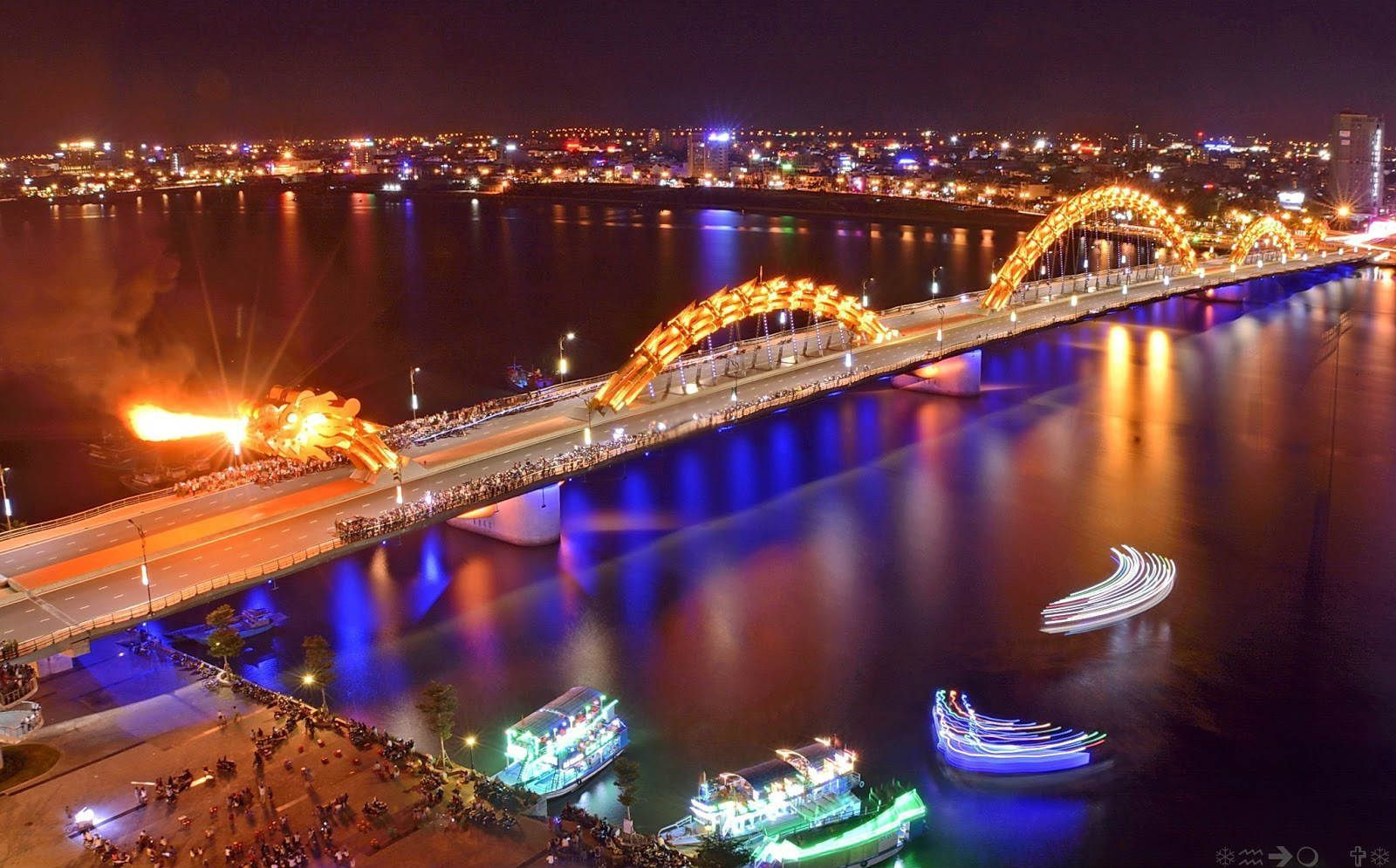
If the Thuan Phuoc Bridge represents spatial expansion, the Dragon Bridge stands out as a vivid symbol of a young, dynamic, and creative city. Its dragon-shaped design quickly became an iconic image. Fire-breathing and water-spraying shows at the bridge every weekend draw crowds of locals and tourists alike.
A tourist from Singapore shared: “The Dragon Bridge is very beautiful at night. From the bridge, you can see both riverbanks lit up, which is very impressive. It is one of the most memorable experiences in Da Nang”.
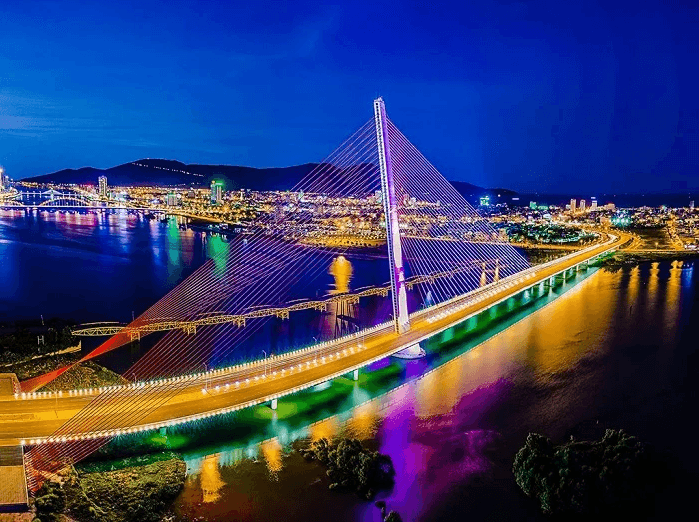
Meanwhile, the Tran Thi Ly Bridge offers a distinct architectural statement. With its cable-stayed design and uniquely inclined pylon, the bridge not only serves transport needs but also contributes to the modern appearance of the city.
Beyond facilitating movement, these bridges have helped shape the cultural and economic landscape along both banks of the Han River. Thanks to this network, new urban areas, tourism zones, and riverside services have emerged, driving economic growth and improving residents’ quality of life. The Han River has thus become a vibrant public space, hosting a wide range of cultural events, festivals, and tourism activities.
Over time, the bridges have come to represent more than engineering achievements. They are symbolic “spans” linking the past with the present, preserving memories while reflecting Da Nang’s development journey.