

Vietnam’s Alternō sand battery drives decarbonization
DNO - Vietnam's Alternō sand battery has secured a top-three position in “Clean Energy & Storage” category at the Start Up Energy Transition Award 2026.
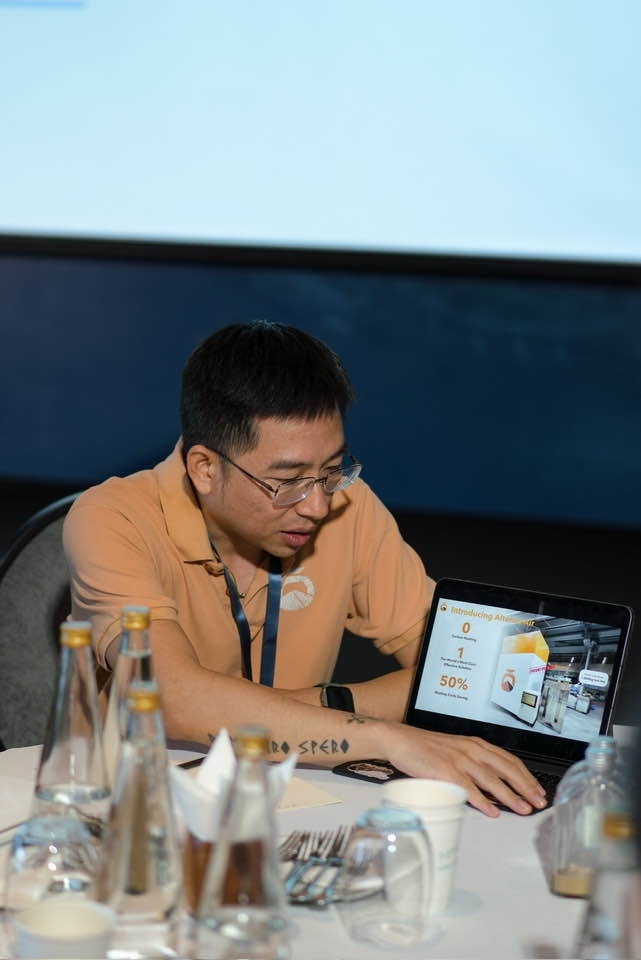
Outperforming more than 470 teams from 79 countries, this achievement underscores the firm’s technological credibility and signals the growing presence of Southeast Asian innovators.
How does Alternō sand battery operate?
Organized by the German Energy Agency (DENA), in collaboration with the Federal Ministry for Economic Affairs and Climate Action (BMWK), the award recognizes pioneering solutions that facilitate the transition toward sustainable energy systems.
Within this highly competitive landscape, Alternō distinguished itself through its development of a thermal energy storage system known as a “sand battery". This utilizes readily available sand to store heat at high temperatures for industrial applications such as drying agricultural products or large-scale production.
What renders this innovation particularly compelling is its capacity to reconcile cost efficiency with environmental sustainability.
In contrast to conventional chemical battery systems that rely on scarce and expensive materials, Alternō’s approach leverages abundant resources, thereby potentially reducing storage costs by up to 50% while minimizing ecological impact.
Such attributes position the technology as a viable solution for energy-intensive sectors, particularly in emerging markets.
According to CEO Ho Viet Hai, the company has attracted considerable international interest, with partners in Africa and Europe expressing intent to host production facilities.
Nevertheless, Alternō is prioritizing domestic manufacturing, with plans to establish a production base in Da Nang.
This strategic decision reflects a broader ambition to cultivate a localized green technology ecosystem while integrating Vietnam more deeply into global energy value chains.
The Alternō sand battery is a thermally insulated steel container filled with fine sand, heated to up to 600°C via embedded conductive rods connected to an external power source, enabling efficient heat storage.
A smart chip and integrated sensors continuously monitor system performance, transmitting real-time data to users and operators.
The system is designed to utilize renewable energy sources such as wind and rooftop solar, while also allowing grid electricity input during off-peak hours to optimize costs.
Alternō incorporates software that calculates carbon emissions reductions, enabling businesses to generate carbon credits as an additional revenue stream.
Drive decarbonization and net-zero emissions
The Alternō sand battery is positioned as a promising solution in the global pursuit of net-zero emissions, particularly in industries where heat accounts for a significant share of energy consumption.
Long-duration thermal storage technologies like this are increasingly viewed as critical to reducing emissions while improving energy efficiency in manufacturing.
The system helps cut carbon emissions in sectors that rely heavily on thermal processes, areas that are often difficult to fully electrify using renewable energy.
In practical terms, the technology allows businesses to reduce dependence on fossil fuels, especially coal, thereby easing pressure on power grids and diversifying energy sources.
A key advantage lies in its use of sand as a low-cost, durable storage medium, offering a viable pathway for industrial decarbonization.
Moreover, the system enhances energy safety, functioning as a reliable backup without the risk of fire or explosion, even under extreme conditions.
Alternō has already deployed its technology with major partners such as PepsiCo and Mondelez, as well as agricultural processing firms. Internationally, the company has established a presence in Ibaraki, Japan.
The decision to develop the product in Da Nang reflects a broader ambition to transform the city into a hub for next-generation energy exports, leveraging its strategic port, modern logistics and growing reputation as a regional innovation centre.