

The Hygge Farm: An experiential tourism model attracts international visitors to rural Da Nang
DNO - After years of traveling across numerous countries, Mr. Tran Thanh Ha chose the ‘Mo Coi’ (Orphaned) Hamlet in Que Son Trung Commune, Da Nang (formerly Que My Commune, Que Son District, Quang Nam Province) to begin his entrepreneurial journey.
In the past, the ‘Mo Coi’ Hamlet was sparsely populated and largely deserted. Around 20 years ago, only a handful of households remained, but most left due to a lack of jobs and basic infrastructure. The name ‘Mo Coi’ (meaning “orphaned”) originated from this desolation, despite the area once being home to Ha’s family.
In 2021, Mr. Ha decided to start his business on his family's own plot of land. He cleared the acacia trees, rehabilitated the soil, and gradually developed zones for greenery and vegetable cultivation, cattle raising, free-range poultry, ponds, accommodation facilities, and outdoor communal spaces.
Drawing on his training and volunteer experience in more than 20 countries, Mr. Ha realized that transplanting foreign models wholesale into Vietnam would fail if they were ill-suited to local conditions. He therefore chose to combine agriculture, education, and community-based tourism through The Hygge Farm model.
“It is still agriculture, but the greatest value does not come from vegetables, fruit, or poultry, it comes from services delivered through tourism activities. Visitors to the farm do not just come to look around; they live with local people, work alongside them, and share experiences. That is the direction The Hygge Farm is pursuing” Mr. Ha said.
“The first visitors were volunteers who helped build the farm. After their stay, satisfied with their experiences, they left many positive reviews on reputable travel websites and social media platforms” he added.
As a result, The Hygge Farm gradually became known. Over the past four years, more than 1,500 volunteers have come here and engaged in cultural exchange and contributed to the farm’s development.
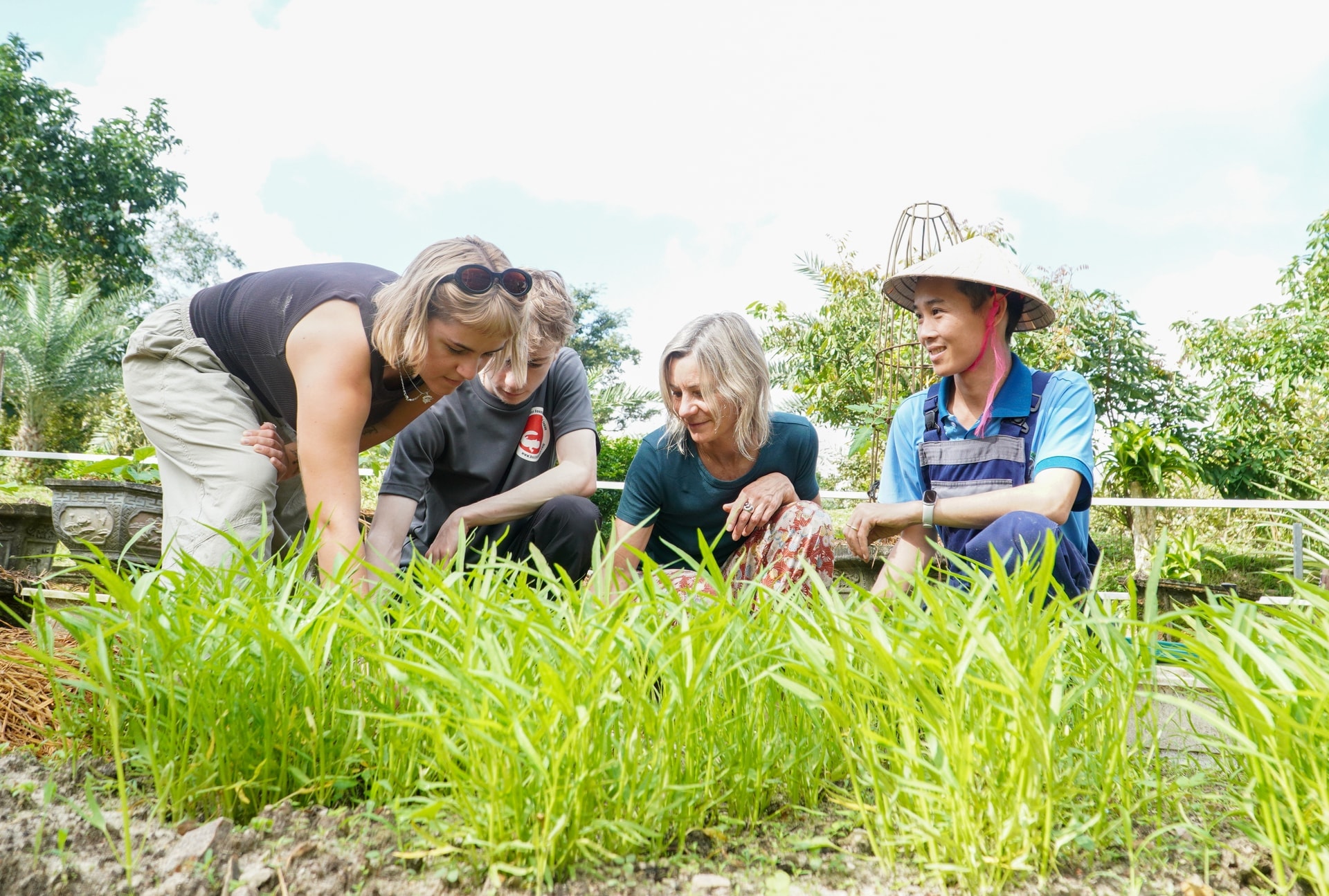
The educational farm that Mr. Ha aims for is a place where tourists live and work like genuine farmers. They not only enrich their knowledge and understanding of local culture through hands-on farming, animal husbandry, and interaction with local farmers, but also broaden their global perspectives through exchanges among volunteers and international guests.
Mrs. Kirsten Syme, a visitor from New Zealand, said that while researching travel in Vietnam online, she was particularly impressed by reviews of The Hygge Farm’s educational model. She quickly arranged a one-week stay so her son could travel and expand his knowledge in an engaging educational environment.
“Today’s travel trend is no longer about booking tours, visiting famous landmarks, taking photos, and staying in hotels; it’s about experiencing, working, enjoying life, and giving back. At The Hygge Farm, we easily connected with local people and friends from many countries, sharing and learning through the farm environment and cultural exchange activities” she said.
Once the farm’s operations stabilized, Mr. Ha began focusing on community value. Experiences were extended beyond the farm’s boundaries, allowing visitors to interact more with local farmers and participate in planting rice, harvesting beans, making vermicelli, and preparing cassava noodles.
These activities help visitors better understand rural culture while contributing to higher incomes for residents of the ‘Mo Coi’ Hamlet.
Today, the ‘Mo Coi’ Hamlet is no longer a symbol of desolation. Thanks to the return of Mr. Tran Thanh Ha and the development of The Hygge Farm, it has become an appealing destination for international travelers seeking hands-on experiences, cultural learning, and a life close to nature.