

Bui Thi Xong: From boatwoman in Hoi An to “the world’s most beautiful grandmother”
DNO - From a boatwoman earning her living on the Hoai River, Ms Bui Thi Xong rose to international prominence through the photograph "Hidden Smile", bringing the gentle spirit of Hoi An to audiences around the world.
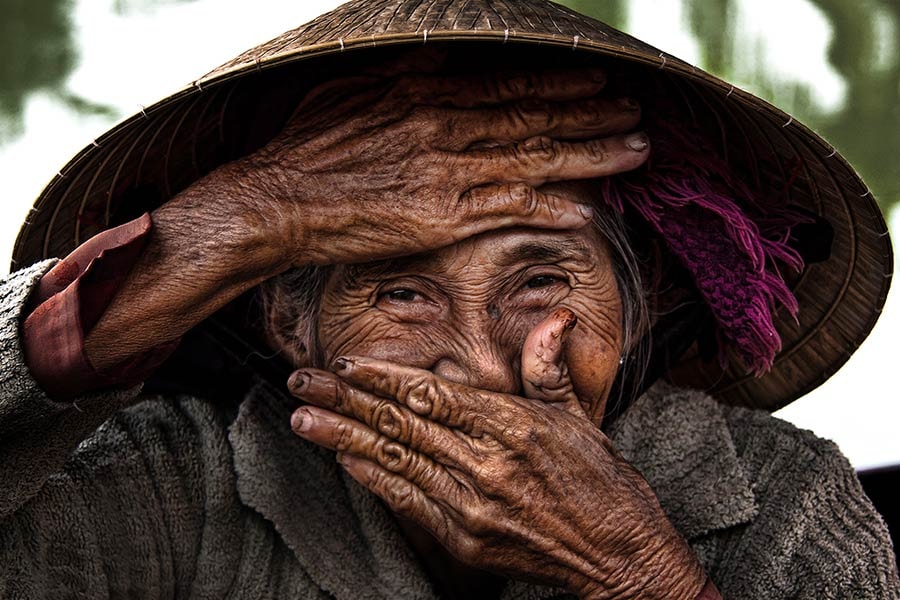
Bui Thi Xong, also known locally as Bui Thi Song, resides in Hoi An Ward, Da Nang. Long before international attention found her, her life was defined by simple routines and hard work.
She took up rowing relatively late, in her early sixties, as tourism in Hoi An began to flourish in the early 2000s.
At first, she sold small items to tourists from her boat. Later, she began rowing visitors along the Hoai River, offering them a quiet, intimate view of the ancient town from the water.
A turning point came in 2011, when French photographer Rehahn visited Hoi An and met Mrs. Bui Thi Xong, or Madam Xong, as Réhahn affectionately calls her.
At the time, he was a tourist with a keen interest in Vietnam. As reported by https://www.rehahnphotographer.com/, during his photographic explorations, he noticed a woman ferrying tourists along Hoi An’s waterways in her sampan boat. Instinctively drawn to her, he asked for a ride.
When Réhahn asked Madam Xong if he could take her portrait she shyly obliged. After seeing her own photo, she started giggling and covered her smile with one hand.
This action inspired Réhahn to take another picture of her in this pose. For the second shot, she covered her mouth with one hand and her forehead with the other pretending to hide. Her hands framed the smile and that was the birth of the “Hidden Smile” project.
After Réhahn chose the photo for the cover of his first book “Vietnam, Mosaic of Contrasts”, it was published worldwide. Madame Xong’s “Hidden Smile” became one of the most well-known photos of Vietnam in the world.
The image tells a powerful story without words: bright, expressive eyes, weathered hands, and a shy smile that seems to hold both resilience and kindness.
The photograph quickly spread across international media, winning awards and being exhibited in numerous countries. Several U.S. publications went on to describe Xong as “the world’s most beautiful grandmother”, a title not rooted in physical appearance, but in the quiet humanity her portrait conveyed.
The sudden recognition brought unexpected changes to her life. Visitors began seeking her out at the Hoai River, hoping to meet her, ride her boat, or take photographs together.
Her portrait appeared in photo books, souvenir shops around Hoi An, and was later displayed at the Vietnam Women’s Museum in the capital city of Ha Noi.
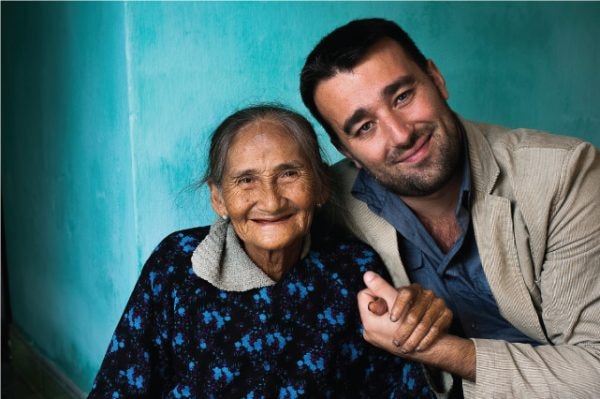
As reported by VnExpress, Rehahn shared part of the proceeds from the photograph to support Xong, gifting her a new boat when she was still working and continuing monthly financial assistance as she grew older.
He regularly visits her, inviting her to his gallery on Phan Boi Chau Street in Hoi An. Though Xong cannot read or speak foreign languages, she says she has always felt the sincerity in how she has been treated.
Now in her eighties, Xong has retired from rowing. Her boat rests quietly on the riverbank beneath water coconut trees. Each morning, she wakes early to attend physical therapy for joint pain, then returns home for a modest breakfast and rest. She lives alone by choice, with children and grandchildren nearby.
She is considered a piece of “living heritage,” helping shape and preserve the unique urban character of Hoi An. Her’s smile has travelled the world - a gentle emblem of Hoi An’s enduring warmth and humanity.