

Da Nang tour guides strengthen role as “Tourism Ambassadors”
DNO - With the motto "Professionalism for greater reach, responsibility for sustainability", Da Nang’s tour guides continue to enhance their role and responsibility amid digitalization and regional expansion, contributing to the overall development of the local tourism sector.
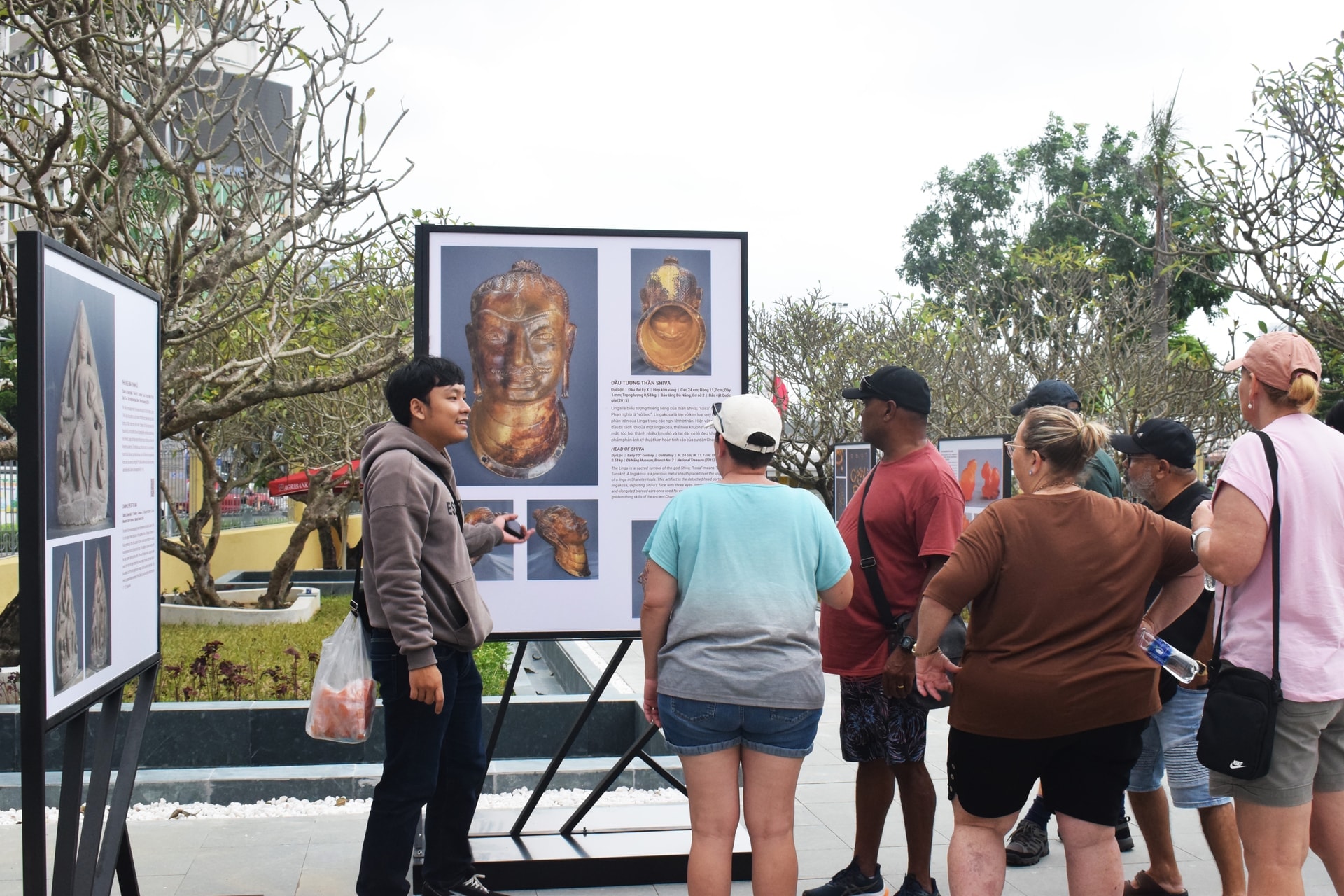
Building a professional team of tour guides
According to the Da Nang Department of Culture, Sports and Tourism, after the merger of the Quang Nam and Da Nang Tour Guide Sub-associations, the Da Nang Tour Guide Sub-association now has a total of 2,650 members. 1,717 of them renewed their licenses for 2025, whilst 309 are newly registered members.
The Sub-association has nine affiliated clubs including English-, French-, Vietnamese-, Chinese-, Korean-, German-, Japanese- and Russian-speaking guide clubs, as well as a club specializing in the South Korean market.
Mr. Vo Van Anh, Chairman of the Da Nang Tourist Guide Sub-association, said that, over the past year, the Sub-association in coordination with the Travel Management Division of the municipal Department of Culture, Sports and Tourism, successfully organized 10 training courses for license renewal in 2025, benefiting nearly 1,000 tour guides.
Applying knowledge with flexibly
With the expansion of the tourism operating area, interpretive content about Da Nang has become increasingly diverse and rich.
Tour guide Tran My Quyen noted that alongside the broader geographical scope following the merger is the rapid development of artificial intelligence (AI). Therefore, this requires each tour guide to make greater efforts to combine traditional guiding skills with updated information on new routes and destinations, while flexibly and effectively applying AI.
She also stressed the need for tour guides to enhance their storytelling ability so that each narrative touches the emotions of tourists.
Mrs. Quyen underlined a must-do for tour guides to connect and develop integrated route-based information systems such as the “Heritage Journey” linking the Museum of Cham Sculpture, the Hoi An Ancient Town and the My Son Sanctuary; routes to “red addresses” like the Dien Hai Citadel, the Peace Monument on September 2 Street, the Hoa Vang Martyrs’ Cemetery, the K20 Historical Site and the Vietnamese Heroic Mother Monument; and routes to traditional craft villages such as Non Nuoc stone carving, Nam O - Man Thai fish sauce making, Tuy Loan rice paper making, Thanh Ha pottery making and Kim Bong carpentry.
Sharing his perspective, tour guide Huynh Ngoc Hung remarked “We don’t just learn routes and sites, we study the underlying cultural currents. Instead of taking visitors to individual pagodas one by one, we tell the story of ancient merchants’ journeys from the sea into the ancient town”.
He stressed the necessity for local authorities and the city’s Tourism Association to establish standardized rest stops along inter-provincial routes to safeguard the health of both tourists and tour guides.
He added greater efforts should to be made to accelerate the digitalization of interpretive content. Once a shared digital data bank is formed for the entire region alongside unified licensing, knowledge must also be standardized so that visitors, regardless of which tour guide they meet, receive the most accurate and valuable insights into local culture.