

Foreign visitors flock to Da Nang for hands-on organic farming experiences
DNO - Increasing numbers of international travellers are seeking authentic agricultural experiences, and Da Nang is emerging as a prime destination for this growing trend.
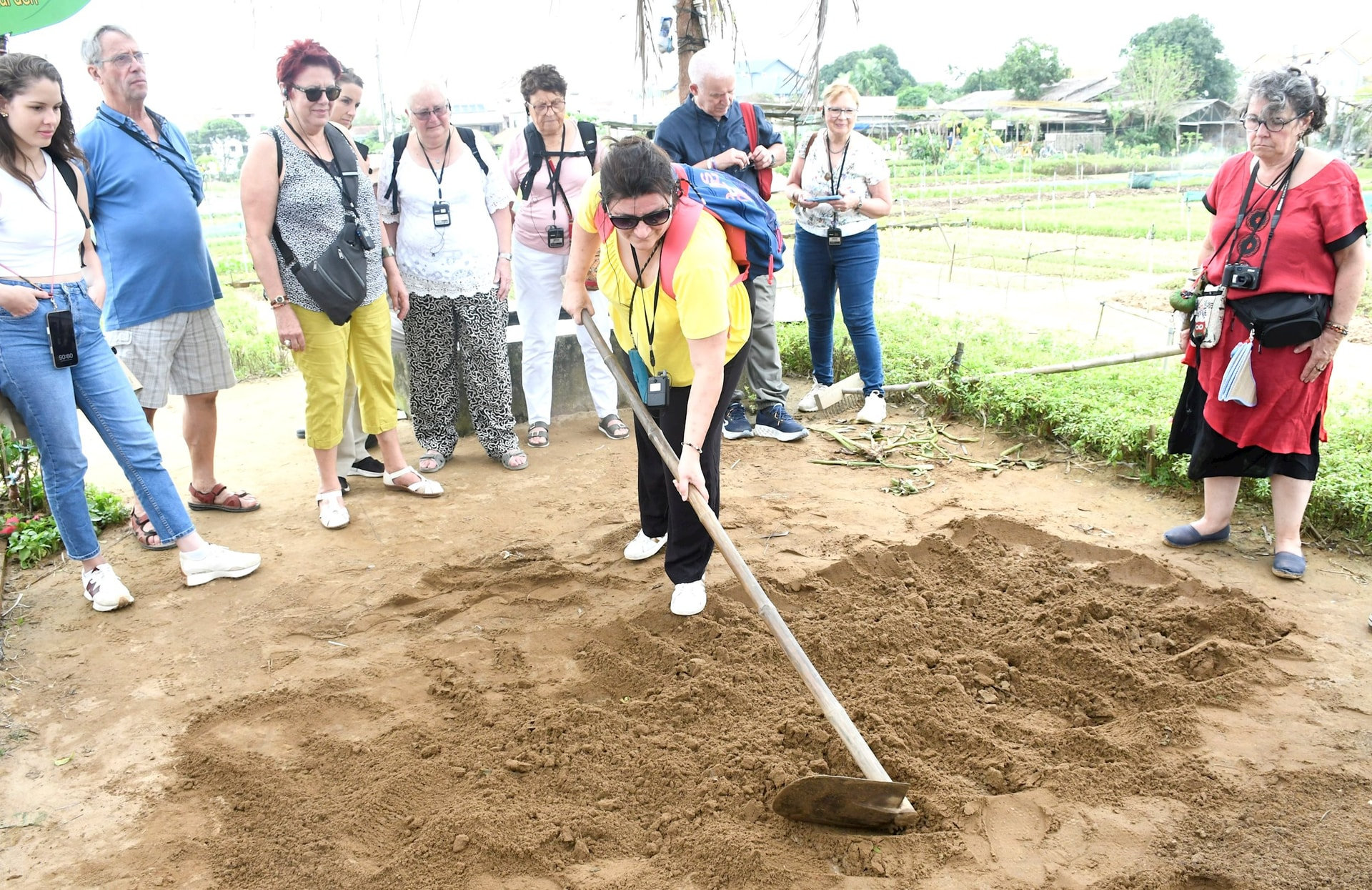
The city’s organic farming villages offer tourists a chance to engage directly with sustainable agriculture while discovering local culture and traditions.
Immersive visit to organic farming village
At the Thanh Dong Organic Vegetable Village, Hoi An Dong Ward (Da Nang), Mr. Le Nhuong, the Director of the Organic Farming and Tourism Cooperative, reported that in 2024, nearly 1,700 international visitors and 900 domestic tourists explored the village.
Since the beginning of this year, around 2,000 international visitors and over 1,000 domestic tourists have come to experience the village firsthand.
“It’s exciting to see visitors eager to learn about the lifestyle, customs, and cultural identity of our organic farming community,” Mr. Nhuong said.
International guests are especially drawn to the hands-on activities. Tourist Barbara Gerard from Ireland, noting that Northern European agriculture focuses mainly on wheat, potatoes, and sheep, expressed fascination with the techniques used in organic vegetable cultivation.
“I admire the farmers’ dedication. Their work under the sun does more than grow crops, it brings life and vitality to every plant”, Gerard said.
Similarly, Gerard Mc Namara, an Irish visitor, explored the entire Thanh Dong vegetable garden, which spans over 1,000 square meters, and thoroughly enjoyed the hands-on experience. He remarked that the farmers of Thanh Dong are extremely diligent and hardworking.
He was particularly impressed by their methods of controlling pests and protecting crops, noting that these practices offer valuable lessons in safeguarding agricultural yields, creativity, and, above all, a love for nature.
“The farmers here have helped me understand that, in the context of climate change and environmental pollution, organic farming is an essential path. It conserves resources, reduces costs, protects the environment, and at the same time provides visitors with a truly engaging and enjoyable experience”, Gerard Mc Namara said.
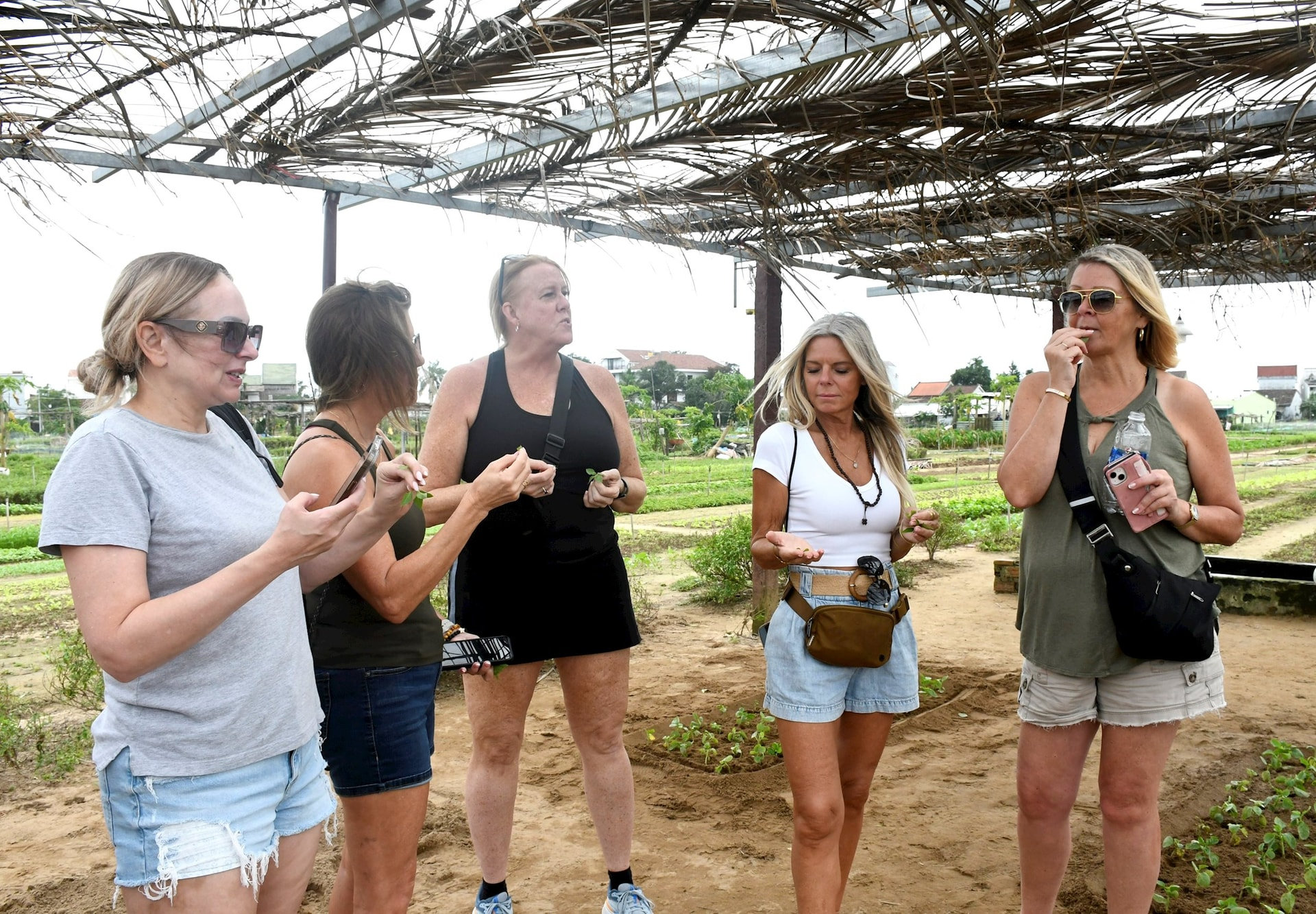
Other villages, like the Tra Que Vegetable Village (Hoi An Tay Ward), a national intangible cultural heritage site and one of Vietnam’s top ten attractions according to France’s Le Figaro, illustrate the trend.
With over 200 households cultivating nearly 20 hectares, the village balances income from vegetable sales with tourism activities.
Ample room for expansion
The city emphasize the potential of combining sustainable agriculture with tourism. The local authorities noted that organic farming should not only produce safe, green products but also create unique agricultural tourism experiences that captivate visitors.
The UN World Tourism Organization (UNWTO) forecasts that agricultural and rural tourism will become one of the fastest-growing segments in the coming years.
By 2030, clean and organic agri-tourism is expected to account for 10% of global tourist arrivals, generating an estimated USD 30 billion in revenue, with annual growth of 10% to 30%.
In comparison, traditional tourism types are projected to grow at an average rate of only 4% per year.
The city authorities will continue advising the city government on policies and mechanisms to encourage and support the sustainable development of organic agriculture linked with tourism.