

Tra Kieu - Center of Champa’s history and art
DNO - Tra Kieu is not only an archaeological site but also a priceless historical and cultural treasure, providing vivid evidence of the glorious period of the Champa Kingdom.
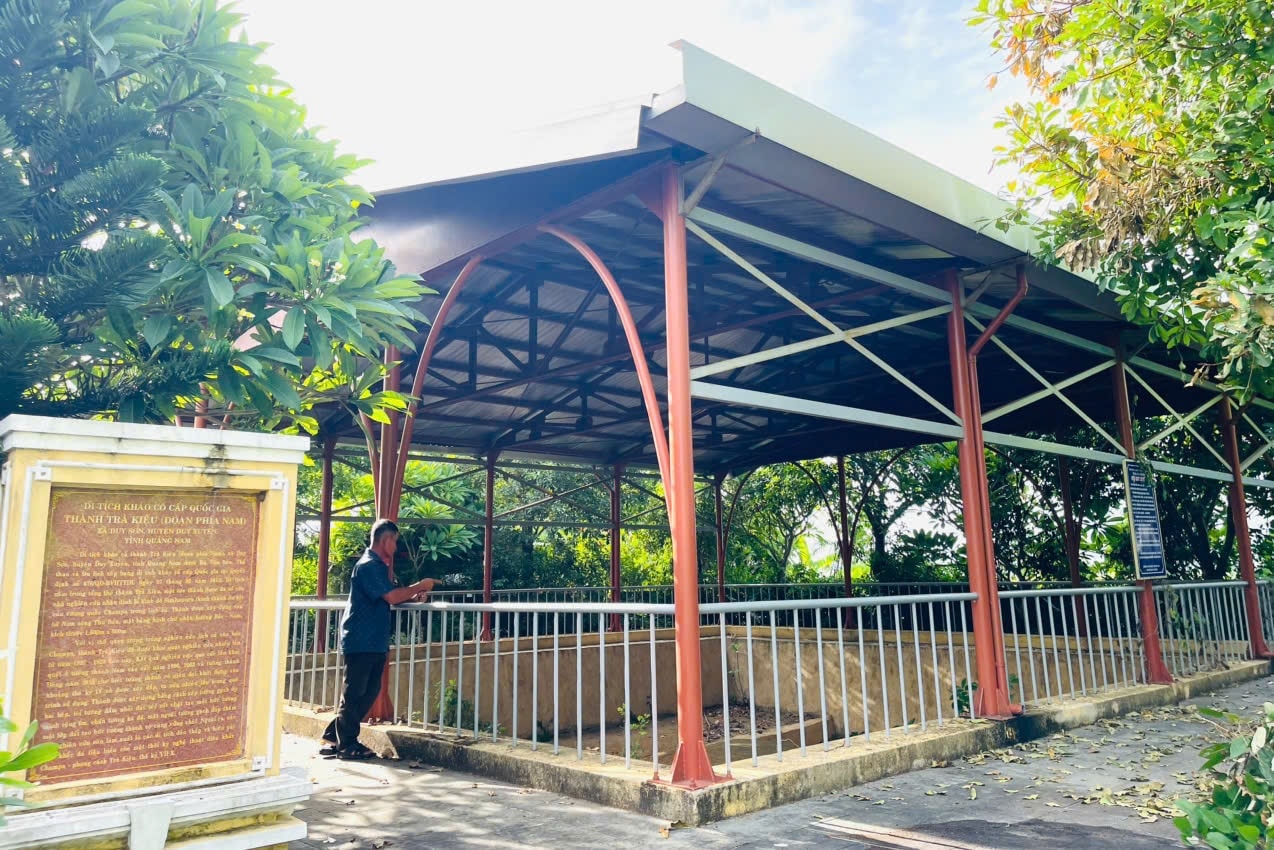
Located on a low hill along the Thu Bon River, Tra Kieu has been identified as the first capital of Champa, known as Simhapura (City of Lion), which existed for nearly 250 years.
It was here that Cham kings, most notably King Prakasadharma in the 7th century, ruled and laid the foundation for the kingdom’s prosperity.
Its location on the waterway connected two key centers: My Son, the religious center, and the ancient trading port of Hoi An - the economic hub.
Artifacts discovered at the site, particularly sculptures and architectural decorations dating back to the 10th century, revealed a distinctive, refined, and expressive artistic style, later defined by scholars as the Tra Kieu Style.
This style is reflected through bas-reliefs, statues of gods and architectural motifs bearing strong Hindu influences but strongly localized, demonstrating the creativity of Cham artisans.
Tra Kieu is a multi-layered complex converging residential remains, ramparts, temples and administrative centers, with relics spanning a millennium, from the pre-Cham period to the peak of the Champa kingdom.
Outstanding among them is the Tra Kieu sculpture style, reflecting its elegance, expressiveness, and distinctly localized interpretation of Hindu art.
Excavations at Tra Kieu provide a comprehensive picture of how an ancient urban center evolved from its earliest settlements to the height of Champa civilization.
Tra Kieu was recognized as a national relic by the Ministry of Culture, Sports, and Tourism in 2013.
However, the current challenge is to turn this place into an attractive cultural and historical destination.
Some notable proposals include building a mini museum to display artifacts, designing tours with My Son Sanctuary and the Museum of Cham Sculpture, organizing historical reenactment activities and Champa cultural workshops, or applying VR/AR technology to allow visitors to relive the glorious period of the ancient capital rather than merely viewing its ruins.