
Gửi bình luận
DNO - The digitalization of monuments in Da Nang City is necessary for effectively and sustainably preserving, managing, and promoting the value of cultural heritage sites.

Da Nang currently has 6 special national-level relics, 84 national relics, 475 municipal-level ones, 30 intangible cultural heritages and documentary ones, and over 200 monuments on the inventory list.
An essential trend
In mid-May 2026, Hai Van Ward (Da Nang City) made its debut with the official launch of a virtual cultural and historical heritage space powered by VR360 technology. As a result, 12 out of 15 municipal-level historical and cultural relics within the ward have been successfully incorporated into the platform until now.
Beyond fully capturing and digitizing the relics as they stand today, this technology also delivers vivid, accessible experiences for both residents and tourists, making the preservation and promotion of heritage far more effective.
Earlier, on May 6, 2026, Ban Thach Ward deployed VR360 technology for the management and conservation of local cultural heritage sites, including Van Thanh - Khong Mieu, the Ky Anh Tunnel, the Martyr Memorial House Pham Sy Thuyet, and Dam River, in line with its tourism development.
These two localities have been recognized as pioneers in implementing the digitalization of relics since the administrative boundary merger of Da Nang City and Quang Nam Province.
Digitalization efforts in some areas actually began years ago, using specialized software. Taking My Son Sanctuary, for example, its management board has teamed up with partners to roll out an online travel experience via the Metaverse since late 2022. The platform runs on three key technologies: VR360 for virtual tours, Metaverse spy, and 3D interactive maps.
The consulting team gathered this data using flycams and specialized cameras, creating lifelike 360-degree views enhanced with artificial intelligence (AI). Meanwhile, the Metaverse spy system was built on 3D spatial modeling that mirrors the actual size and scale of the My Son relics.
Until now, over 60 monuments and some 200 important artifacts at the site have been digitized, thanks to a combination of 3D laser scanning, multi-angle photography, and photogrammetry.
Building a synchronized database
Digitalizing relics is now a critical priority. It is not only to build a scientific data foundation for research but also to strengthen site management, give the public better access and richer experiences, and help boost local tourism.
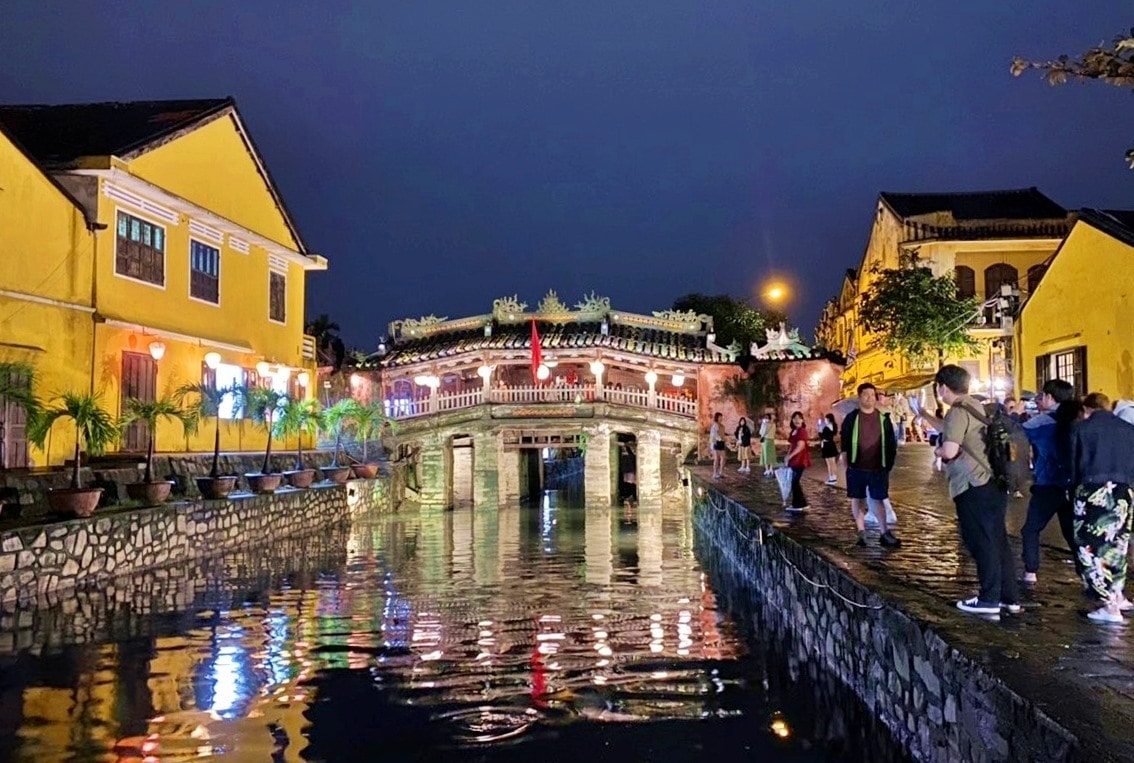
In Hoi An Ancient Town, the push to digitize relics actually began about ten years ago, led by the Hoi An World Cultural Heritage Conservation Center. Hoi An city is now home to over 1,360 historical sites and scenic landscapes. Hoi An Ancient Town itself accounts for nearly 1,155 relic sites.
In recent times, Hoi An has been rolling out a project to digitize its heritage sites aimed at capturing and preserving every detail—from architecture and artifacts to decorative patterns, spatial design, and the current state of each relic.
Before being applied, the system will be linked to both local and national databases so that residents, travelers, researchers, and students can tap into the information from anywhere, provided that permission is granted.
With tools like 3D models, 360° photos, VR, AR, and automated narration, online exploration will feel far more lively and visually. The project is set to run from 2026 to 2029, with a budget of roughly 23 billion VND.